If you’ve ever picked up a sleek smartphone case that catches the light with a sharp, metallic sheen, or stared at a custom water bottle that shimmers like polished aluminum, chances are you’re looking at the end result of a metallic color masterbatch. For years, I’ve been supplying color masterbatches to manufacturers across the plastic and packaging industries, and one of the most common questions I get from new clients—ranging from small injection molding shops to large consumer goods brands—is a simple one: “What exactly is a metallic color masterbatch, and why does it matter more than just adding metallic powder to my plastic?” Color Masterbatches
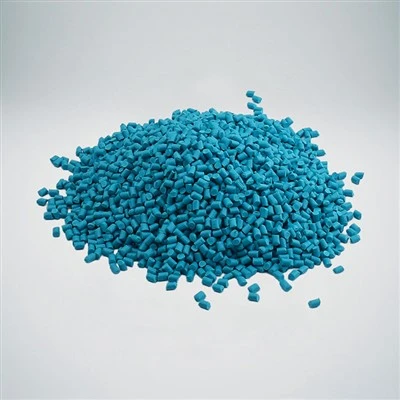
Let me start with the basics. A masterbatch, in general, is a concentrated blend of pigments, additives, and a carrier resin that manufacturers mix into raw plastic pellets to add color, functionality, or aesthetic properties to their final product. Think of it like a high-dose vitamin: you don’t eat the powder straight, but a small amount mixed into your daily food gives you the benefit you need. Metallic color masterbatches, then, are a specific type of masterbatch designed to replicate the reflective, lustrous appearance of real metals—like aluminum, bronze, or gold—without requiring manufacturers to handle messy, inconsistent metallic powders on their production lines.
Here’s where the science gets important, and where many first-time users run into issues if they cut corners. Unlike regular organic or inorganic pigments that dissolve into the plastic matrix, metallic masterbatches rely on tiny, flat metallic flakes—usually aluminum, sometimes copper or nickel—that are dispersed evenly throughout the carrier resin. The flakes are typically 5 to 20 micrometers thick, and their flat, smooth shape is what creates that signature reflective effect. When you inject or extrude the plastic into a final part, those flakes align parallel to the product’s surface, bouncing light back in uniform, bright waves rather than scattering it haphazardly. That’s why a part made with a high-quality metallic masterbatch has a consistent, “metal-like” finish, not a streaky, dull mess.
But not all metallic masterbatches are created equal, and that’s where my team and I spend most of our time refining our product. Many cheaper masterbatch suppliers cut costs by using flake sizes that are too large, or mixing in too few flakes, which leads to a finish that looks more like dull paint than metal. Others use flake treatments that degrade when exposed to high processing temperatures—something that’s a big problem for high-heat applications like automotive interior parts, which require masterbatches that can withstand 200°C+ during injection molding without turning gray or losing their shine. Our masterbatches, for example, use surface-treated aluminum flakes that are resistant to oxidation and high heat, so even when a customer is molding thin, intricate parts, the finish stays consistent across every piece of a 10,000-part run.
Another key component is the carrier resin. The carrier is what binds the metallic flakes and pigments together, and it has to be compatible with the raw plastic a manufacturer is using. If a customer is working with polyethylene (PE) for a toy, their metallic masterbatch’s carrier should also be PE, so it mixes evenly without creating weak spots in the final plastic part. If it’s incompatible, you can get things like “fish eyes”—small, opaque spots in the product—or inconsistent color distribution. I’ve had clients come to me after using a cheaper masterbatch that had a polypropylene carrier with their PE raw material, and their entire run of outdoor garden tools had streaks because the flakes didn’t disperse properly. That’s the kind of headache we eliminate by testing every masterbatch carrier against a wide range of base resins.
Now, you might be wondering why manufacturers don’t just add metallic powder directly to their raw plastic pellets. The answer comes down to consistency, safety, and efficiency. Adding loose metallic powder means you have to measure it accurately every time—even a small miscalculation can lead to parts that are too dull or too shiny. Loose powder also creates a mess on production floors, with fine metal particles floating through the air, which isn’t just a safety hazard for workers breathing it in, but can also cause electrical issues with molding equipment. Masterbatches, on the other hand, come in uniform pellets, so they’re easy to measure with standard mixing equipment, create no excess waste, and are 100% consistent batch to batch. For a brand that needs 500,000 identical disposable plastic cups for a marketing campaign, that consistency is non-negotiable—they can’t have one batch of cups that looks silver and the next that looks faded gray.
Let’s talk about some of the common applications where metallic masterbatches make a huge difference. The first, and most visible, is consumer packaging. Think of the energy drink cans with their bright gold or metallic silver labels, or the plastic cosmetic tubes that shimmer on store shelves. Those finishes aren’t just decorative—they help products stand out in a crowded retail space. I worked with a small skincare brand last year that was struggling to get shelf space because their plain white tubes blended in with dozens of other brands. We supplied them with a metallic rose gold masterbatch, and within six months, their sales jumped 30% because their tubes caught the eye of shoppers walking down the beauty aisle.
Another big application is automotive parts. Many car manufacturers use metallic masterbatches for interior trim, dashboard accents, and even wheel covers. These parts need to be durable, resistant to UV light (for parts that are exposed to sunlight), and able to withstand temperature changes from hot summer days to cold winter nights. Our metallic masterbatches for automotive use include UV stabilizers that prevent the metallic flakes from fading or chalking over time, which is a problem with cheaper masterbatches that don’t have that protection. We also make sure the flakes are evenly dispersed so that the finish is consistent across curved parts—something that’s hard to achieve with loose powder mixing.
Even industrial products use metallic masterbatches. For example, plastic pallets used in warehouses often have a metallic finish to make them easy to spot with warehouse scanning equipment, or to show when they’re new and undamaged. Some electrical components also use metallic masterbatches for static dissipation, since the aluminum flakes can help conduct small amounts of electricity to prevent static buildup that can damage sensitive electronics. It’s not just about looks—metallic masterbatches can add functional benefits too, which is why more and more industries are using them beyond just consumer goods.
Now, if you’re a manufacturer thinking about switching to metallic masterbatches (or switching from a supplier that’s let you down), there are a few things to keep in mind. First, know your end product. What type of plastic are you using? What processing method—extrusion, injection molding, blow molding—are you using? What’s the environment the final product will be in? A masterbatch that works for a toy won’t work for an outdoor garden chair, and one that works for a blow-molded water bottle won’t work for an injection-molded smartphone case. That’s why, as a supplier, we don’t just sell a one-size-fits-all metallic masterbatch—we work with each customer to test their specific application before we ship anything.
Another thing to ask is how the masterbatch is tested. Does the supplier test for things like flake dispersion, heat stability, and UV resistance? A lot of suppliers will send a sample that looks good in a small test, but when you scale up to a full production run, the finish falls apart. Our company tests every batch of metallic masterbatch three times: first in our lab to check flake count and dispersion, then in a small molding machine to test finish consistency, and finally, we send samples to third-party labs to test for durability under real-world conditions. For example, if a customer is making parts for use in Florida, we’ll test the masterbatch for UV resistance by exposing samples to simulated sunlight for 1,000 hours to make sure the finish doesn’t fade.
I’ve been in this industry for over 15 years, and I’ve seen a lot of trends come and go, but metallic masterbatches have only grown in demand. That’s not just because consumers want shiny products—it’s because manufacturers are realizing that a high-quality masterbatch is a cost-effective way to add value to their products without investing in new equipment or materials. Instead of switching to more expensive metal parts, brands can use a metallic masterbatch to get that metal look for a fraction of the cost, with the durability and flexibility of plastic.
Of course, no product is perfect, and metallic masterbatches aren’t an exception. One challenge we still work on is matching exact metal shades. For example, replicating a specific “burnished bronze” or “matte silver” finish can take multiple test runs, since each brand has a unique vision for their product. That’s why we offer custom color matching services—we can work with a customer’s sample (or a Pantone color code) to create a metallic masterbatch that matches exactly what they need, rather than forcing them to choose from a pre-set list of shades. I always tell clients: if you can describe the finish you want, we can make a masterbatch that delivers it.
Another consideration is the environmental impact. We all know that plastic production has an environmental footprint, so many of our clients are asking about masterbatches made from recycled carrier resins, or with less pigment content. That’s something we’ve been investing in over the last few years—we now offer a line of metallic masterbatches with 30% recycled carrier resin, without sacrificing the quality of the finish. We also use water-based treatments for our metallic flakes instead of solvent-based ones, which reduces our carbon footprint and is safer for the workers who handle our products. That’s a big deal for brands that are targeting eco-conscious consumers, because they can market their products as both high-quality and sustainable.
At the end of the day, a metallic color masterbatch is more than just a way to add shine to plastic. It’s a carefully engineered blend of metallic flakes, resin carriers, and additives that solves real problems for manufacturers: consistency, safety, cost efficiency, and the ability to create products that stand out in a crowded market. Whether you’re a brand designing a new cosmetic tube, a toy maker creating a line of metallic action figures, or an industrial company making durable plastic parts, the right metallic masterbatch can make all the difference between a good product and a great one.
If you’re currently struggling with inconsistent finishes in your plastic parts, or if you’re looking to add a metallic touch to your next product line and want to avoid the headaches of loose powder mixing, I’d love to talk to you. We work with businesses of all sizes, from small start-ups to large multinational corporations, and we tailor our masterbatches to fit your specific needs. There’s no one-size-fits-all solution when it comes to metallic masterbatches, so let’s discuss your project, test some samples, and find the right product for your production runs.
Building Wire Compounds References
- “Color Masterbatches: Types, Applications, and Manufacturing Processes.” Plastics Technology, 2022.
- “Metallic Pigments for Plastics: Properties and Performance Considerations.” Journal of Plastic Film & Sheeting, vol. 35, no. 4, 2019, pp. 321–345.
- “Surface Treatments for Metallic Flakes in Polymer Composites: Impact on Durability and Appearance.” Polymer Engineering & Science, vol. 60, no. 7, 2020, pp. 1428–1437.
- “Sustainable Masterbatches: Innovations in Recycled Carriers and Low-VOC Additives.” Green Materials, vol. 8, no. 2, 2021, pp. 89–102.
Opta New Materials (Jiangsu) Co., Ltd.
As one of the most professional color masterbatches manufacturers and suppliers in China, we also support customized service. We warmly welcome you to buy bulk durable color masterbatches from our factory. If you have any enquiry about free sample, please feel free to email us.
Address: No.80, Jingang Avenue, Zhenjiang New Area, Zhenjiang City, Jiangsu Province, China.
E-mail: le.yin@optachem.com
WebSite: https://www.optanewmaterials.com/
