If you’ve ever been on a highway, cruising past a fleet of semi-trucks stacked high with shipping containers or hauling bulk liquid cargo, you’ve probably spotted the distinctive rounded shape of an LPG tanker trailer. As someone who’s spent the last 12 years in the LPG tanker trailer supply business, I get more questions about these units than any other product I sell. The one that comes up most often? Do LPG tanker trailers have to stop at weight stations for inspections? LPG Tanker Trailer
It’s not a trivial question. For LPG haulers, a missed weight stop can mean fines, delayed deliveries, or even shutdowns—all of which cost more than just the price of a single missed scale. For my clients, who run small regional propane suppliers, bulk industrial gas distributors, and cross-country transportation fleets, the rules around weight inspections feel like a maze. I’m here to break that down, from what weight stations actually check for LPG trailers, to why those checks matter, and what every hauler needs to know to stay compliant.
First, let’s set the basics: what is an LPG tanker trailer, and why does its weight matter so much? LPG, or liquefied petroleum gas, is a compressed flammable mixture of propane and butane that’s transported in specialized cylindrical tanks. Unlike a regular dry goods trailer, an LPG tanker’s payload isn’t just heavy—it’s dense. A standard 10,000-gallon LPG tanker can hold roughly 42,000 pounds of gas when full, and add the weight of the trailer, chassis, axles, and regulatory safety gear, and you’re looking at a total gross vehicle weight (GVW) that often hits 70,000 pounds—this is the legal maximum for commercial trucks in most U.S. states.
Weight stations exist for two core reasons: to prevent highway damage from overloaded vehicles, which can crack road surfaces or break bridges, and to ensure commercial trucks don’t wear out other road infrastructure faster than they pay for it through fuel taxes. But LPG haulers have an extra layer: beyond just being overloaded, an overfilled LPG tanker is a safety hazard. Modern LPG tankers are designed to have a “vapor space” at the top of the tank—usually 10 to 15 percent of the total volume—to account for thermal expansion. If a driver or loading operator overfills the tank, heat from a summer day can make the gas expand past that vapor space, building pressure inside the tank that can trigger a relief valve or, in extreme cases, rupture the tank. That’s a risk no weight station inspector wants to miss.
So, to answer the question straight up: yes, LPG tanker trailers are subject to weight station inspections. But it’s not just a stop on the scale. Depending on the state, the type of LPG being transported, and the size of the tanker, weight station checks for LPG trailers can cover three main categories: weight verification, payload compliance, and safety-related inspections tied to cargo.
Let’s start with weight verification. Every U.S. state has different axle weight limits, and weight stations run on statewide databases that cross-reference a specific trailer’s make, model, and number of axles with its legal maximum capacity. For a standard tandem-axle LPG trailer (two axles on the rear of the trailer, plus the tractor’s two front axles and two drive axles), the legal axle limits are typically 12,000 pounds per front axle, 34,000 pounds per tandem axle, and 20,000 pounds per drive axle. If a hauler’s total weight exceeds any of these individual limits, they’re not just facing a ticket—they’re risking being put out of service until they can redistribute or unload excess cargo.
I’ve seen this happen more times than I can count with my clients. Last year, a small propane hailer in Ohio picked up an extra 500 gallons of propane to drop off at a rural farm, not realizing his trailer was already topped off. He stopped at a weight station outside Cleveland, and his tandem axle weight came in 1,200 pounds over the limit. The inspector made him unload 500 gallons on the side of the highway—no easy task, especially when you’re 20 miles from the nearest bulk plant. That cost him an entire day of deliveries, plus $800 in fines. It’s a mistake that can be avoided with a little pre-trip planning, but it’s exactly why weight stations are so strict about LPG trailers.
Next, payload compliance. This is where the inspection for LPG goes beyond just the scale. Many weight station inspectors are trained to check for proper LPG tanker loading to prevent that thermal expansion hazard. That means they’ll ask to see the tanker’s liquid level gauge, or in some cases, open the top manhole (with proper safety protocols, of course) to verify the vapor space. Some states, like Texas and Florida, require LPG haulers to carry a copy of their load ticket with them at all times, showing the exact amount of gas loaded and the date of delivery. If that ticket doesn’t match the weight on the scale, the inspector will flag it.
I worked with a client in Florida last quarter who got pulled over at a weight station near Tampa. His load ticket said he had 9,800 gallons of propane, but his tanker’s gauge showed he had 10,100 gallons. The inspector noted that the extra 300 gallons would push the vapor space down to 8 percent, which is below the 10 percent minimum required by state regulations. The hauler had to drive back to his plant to unload the extra, adding 120 miles to his route and another $600 in fees. Again, this is a check that most dry goods trailer inspectors don’t do—because dry goods don’t expand and cause safety risks.
Then there’s the third piece: safety inspections tied to the trailer itself. Weight stations for hazardous cargo (and LPG is classified as a Class 2 flammable gas) often have different inspection protocols than standard weight stations. Inspectors will check the trailer’s registration, its hazardous materials (HazMat) placards, the condition of the tank’s shell, relief valves, hoses, and any safety gear like fire extinguishers or emergency shut-off valves. Some stations also check the trailer’s emissions, since many LPG tankers run on dual-fuel engines for the tractor, but that’s less common than the weight and cargo checks.
Now, the catch: not all LPG tanker trailers are treated the same. There’s a difference between a large interstate LPG tanker (over 10,000 gallons) and a small intrastate bobtail trailer, which is used for delivering smaller quantities of propane to residential customers. Bobtail trailers are smaller, often have their own tank on a single axle or tandem axle setup, and many states have lower weight limits for them. Even so, bobtails still have to stop at weight stations if they’re crossing state lines, and many intrastate routes require them to stop at fixed stations every 100 miles or so.
There’s also a common myth I hear a lot: some haulers think LPG tankers are exempt from weight inspections because they’re carrying hazardous material. That’s not true. The only exceptions are for certain small, non-commercial LPG containers, like the 20-pound tanks you’d use for a grill. For commercial tanker trailers of any size, the rules apply. I’ve had clients tell me they “never get stopped” at weight stations, but that’s often just luck. A weight station inspector can pull any truck at any time, regardless of how it looks, and LPG trailers are high-priority stops because of the cargo’s danger.
As a supplier, I’ve tailored my products to help my clients avoid these issues. That’s why every LPG tanker trailer I sell comes with a calibrated liquid level gauge that’s easy to read, and I provide free training to new clients on state-specific loading rules. I also work with a network of weight station inspectors across the country to stay up to date on changing regulations. For example, last year, California adjusted its LPG tanker weight limits to account for newer, lighter trailer chassis, and I was able to update my product specs to match that change before my clients had to adjust their routes.
But even with the right trailer, compliance is still the driver’s responsibility. Here are a few tips I share with every new client to make weight station stops go smoothly:
- Pre-weigh your load before you leave the plant: Most bulk plants have a small scale you can use to check your total weight before you hit the highway. This is far easier than being flagged at a state weight station.
- Carry your load ticket and vapor space calculation: Don’t rely on your memory. Print out a copy of the load ticket that shows the exact gallons loaded, the vapor space percentage, and the date.
- Know your state’s specific rules: Some states require LPG haulers to have a special permit for over-the-road travel, even if you’re at the legal maximum weight. Check with your state’s Department of Transportation (DOT) before you take a new route.
- Keep your safety gear in good shape: If an inspector finds a faulty relief valve or missing placards, they can put you out of service immediately. Do a pre-trip check of your safety gear every day.
I’ve been in this business long enough to see how a single mistake at a weight station can ruin a hauler’s week. I’ve also seen how a well-maintained, compliant LPG tanker can make a hauler’s job easier. That’s why I don’t just sell trailers— I sell support, and I make sure my clients understand not just the rules, but why they matter. The weight station isn’t just a hassle; it’s a check that keeps the hauler safe, the public safe, and the roads intact.

At the end of the day, if you’re an LPG hauler or a business that relies on LPG transportation, staying compliant with weight station inspections isn’t just a legal requirement—it’s part of doing the job right. If you’re in the market for a new LPG tanker trailer, or if you want to talk through specific weight inspection rules for your routes, feel free to reach out. Whether you’re running a small local operation or a cross-country fleet, I can help you find a trailer that’s built to meet all regulatory standards, so you can focus on delivering your cargo on time.
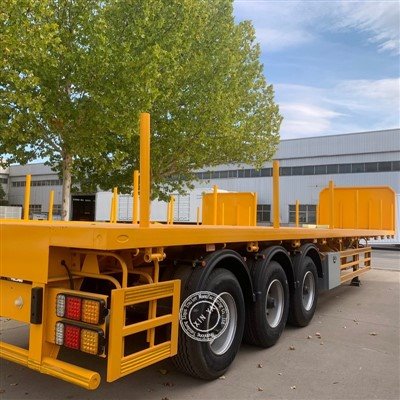
Fence Semi Trailer References
Federal Motor Carrier Safety Administration. (2022). Hazardous Materials Weight and Size Regulations. U.S. Department of Transportation.
National Propane Gas Association. (2023). LPG Hauler Compliance Guide: Weight Station Protocols.
American Trucking Associations. (2021. Overload Prevention and Highway Infrastructure Maintenance Report).
Shandong Yuncheng Xinya Trailer Manufacturing Co., Ltd.
Shandong Yuncheng Xinya Trailer Manufacturing Co., Ltd. is one of the most experienced LPG tanker trailer manufacturers and suppliers in China, featured by quality products and good service. Please rest assured to buy CE approved LPG tanker trailer from our factory. Contact us for customized service and OEM service.
Address: No. 008, Hexie Road, Yangzhuangji Town, Yuncheng County, Heze City, Shandong Province
E-mail: fiona@xinyatrailer.com
WebSite: https://www.china-truckfactory.com/
