Hey everyone, let’s cut to the chase—nothing’s more frustrating than grabbing your drill, loading up a bit you swear should work, lining it up, and… zilch. No cutting, no drilling, just a wobbly mess or a bit that gets stuck like a brick in mud. As a drill bit supplier, I’ve heard this complaint so many times I could probably recite it in my sleep, but today I’m breaking down the real, science-backed reasons your bit’s not pulling its weight—no tech jargon, just stuff that actually makes sense, plus a few pro tips I’ve picked up over years in the game. Drill Bit
First off, let’s start with the basics you might’ve skipped because “it’s just a drill bit.” Wait, size matters—a lot. I’m not talking about if you grabbed a 1/8” bit for a 1” hole, though that’s a rookie move. I’m talking about hole depth and bit length. If you’re drilling a hole way deeper than the bit’s flute length, that’s a silent killer. Flutes are those spiral grooves that chip away material and pull the cut debris out, right? If you’re drilling 6” deep with a 3” flute bit, those flutes get packed full of shavings before you even reach the full depth. The bit can’t bite because there’s nowhere for the crumbs to go—so it just spins in place, wearing itself out instead of cutting. I see this all the time with DIYers who grab whatever bit’s on the top of the box. Pro move: match your bit’s flute length to your desired hole depth, plus a little extra for clearance.
Next, material mismatch. This is where I see so many people flub. You wouldn’t use a butter knife to cut a steak, so why use a general-purpose high-speed steel (HSS) bit on cast iron? HSS is great for wood, soft metal, drywall—stuff that’s not super abrasive or hard. But cast iron? It’s got those hard, gritty carbide flecks embedded in it, and HSS just can’t keep up. The bit’s edges dull almost instantly, and you’re left pushing harder, the bit slipping, nothing happening. Conversely, a carbide-tipped bit meant for concrete is way too brittle for drilling through soft pine—you’ll just snap the cutting edges off before it even makes a mark. I once had a guy come to me with a stack of dull bits, all because he was using a wood bit on rebar. Total facepalm. Always check the bit’s label: “wood,” “metal,” “masonry,” “multi-material” isn’t a get-out-of-jail-free card—it’s a compromise.
Then there’s the drill itself. Wait, your bit’s not the only thing that could be slacking. If you’re using a cordless drill, is the battery charged enough? A 12V drill has nowhere near the torque of an 18V or 20V model, so if you’re drilling through 1/2” steel with a dead 12V battery, the bit will spin without engaging. It’s like trying to turn a doorknob with a wet noodle. Also, drill speed! Every bit has an ideal speed, and most drills have speed settings for a reason. High speed is for soft materials (wood, plastic), low speed is for hard stuff (metal, masonry). Cranking a high-speed steel bit for metal on max speed will make the bit get hot so fast it softens—yes, HSS can soften if you overheat it—so the cutting edges just mash instead of cutting. I’ve seen guys hold the trigger all the way down and wonder why their bit is a hot mess. Pro tip: for steel, set your drill to the lowest speed that still feels stable. You want a steady, consistent spin, not a race.
Wait, what about the bit’s condition? Did you drop it recently? Or did you use it on a material it wasn’t made for a week ago, and just didn’t notice the edges getting chipped? The cutting edges—those sharp little points on the end of the bit—are everything. If one edge is chipped, or the tip is bent, it’s going to wobble when it spins. That wobble doesn’t let both edges bite evenly, so instead of cutting a round hole, you’re making an oval or just scraping the surface. Even small chips can throw off the balance. Another thing: sharpening. A lot of DIYers grab a sharpening stone and go at their bit, but if you don’t get the angle right, you’ll mess up the rake angle—this is the angle between the cutting edge and the surface. If the rake is too steep, the bit will dig in too deep and stall; if it’s too shallow, it’ll just slide around without cutting. That’s why commercial bit sharpeners exist, but even then, it’s easy to mess up. My advice: if your bit’s not worth $20, just replace it. Sharpening is a skill, and a dull bit is usually cheaper to replace than to fix unless you have the right tools.
Oh, and user error—let’s be real, we’ve all been there. Are you applying too much pressure? I see this constantly. People think, “If I push hard enough, it’ll cut!” No, that’s a one-way ticket to bent bits, broken drill chucks, or the bit getting stuck so bad you have to pry it out with pliers. Drills are designed to apply the cutting force on their own; you just need to guide the bit straight, with light, steady pressure. Too little pressure? Also a problem—if you’re barely touching the bit, it’ll spin around and slip on the surface, especially if you’re drilling a smooth material like laminate or glass. And alignment! If you’re drilling at an angle instead of straight, the bit will catch on the edge instead of biting, and you’ll end up with a hole that’s off-center or the bit skids across the surface. A pilot hole helps here—make a tiny indent with a center punch or a small drill bit first to keep the big bit from wandering. That’s a game-changer for clean, straight holes.
Wait, let’s talk about another thing I don’t see a lot of people mention: coolant. No, not the car kind—drill coolant, or even just water or cutting oil. When you’re drilling metal, the friction between the bit and the material creates heat, which, as I said earlier, can soften HSS bits. Even worse, the heat makes the metal expand, so the bit can’t cut through it evenly. A little drop of cutting oil on the bit before you drill will cut friction, keep the bit cool, and make the cuts way smoother. I once had a guy drill through 1/4” stainless steel without any oil, and his bit was so dull he thought it was a carbide bit by mistake—total waste. Even for wood, a light mist of water (for dense woods like oak) can prevent the wood from splintering and keep the bit from overheating.
Now, let’s rule out the weird stuff. Is the bit loose in the drill chuck? That’s a super easy fix—if the chuck isn’t tightened all the way, the bit will wiggle around, no matter how sharp it is. Tighten the chuck with the chuck key, or if it’s a keyless chuck, squeeze it as hard as you can with both hands. I’ve had people call me saying their bit isn’t cutting, and it turns out it was just twisted half-out of the chuck. Another weird one: the surface you’re drilling on. If you’re drilling through a thin piece of metal that’s sitting on wood or another soft material, the bit will push through the metal and dig into the wood, which stops it from cutting properly. Put a piece of scrap metal behind your workpiece to support it—no wood, no plastic, just a hard, rigid surface. That keeps the bit from pushing through too far and getting caught.
So, let’s recap the common culprits: wrong bit for the material, dull or damaged bit, wrong drill speed/torque, too much/too little pressure, misalignment, bit loose in the chuck, no coolant. If you’ve checked all these, and your bit still isn’t cutting, it might be a manufacturing defect—though that’s pretty rare, since we test every batch before it hits the shelves.
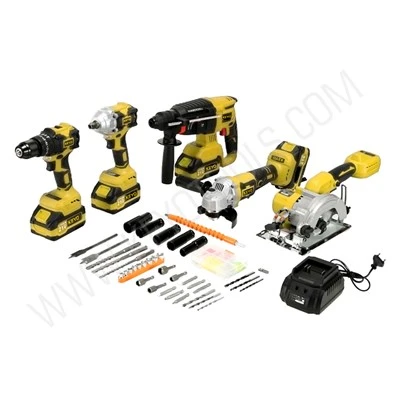
At the end of the day, getting the right bit for the job takes a little know-how, but it’s way easier than buying new drills every time. We’ve got a huge range of bits for every material, from wood to concrete to stainless steel, and our team can help you pick the right one for your project, no matter how big or small. Whether you’re a DIYer working on a home reno, a contractor on a job site, or someone who just needs to drill a few holes for a shelf, we’ve got you covered. If you’re still having trouble, or you’re not sure which bit to grab, reach out to our team and we’ll walk you through it, no pressure. Don’t waste another afternoon fighting a drill that won’t cut—let’s get you the right bit for the job, stat.
Cordless Circular Saw References
- Metal Cutting Technology: Principles and Applications (Industrial Press, 2021)
- “Drill Bit Performance Factors” – Journal of Manufacturing Processes, Vol. 38, 2019
- “Tool Failure Analysis for Drilling Operations” – International Journal of Machine Tools and Manufacture, Vol. 50, 2010
- DIY Handyman’s Guide to Drill Bit Selection (Home Improvement Press, 2022)
- “Torque and Speed Optimization for Portable Drills” – Professional Construction Journal, Vol. 17, 2020
Chongqing Jinswell Tech Co., Ltd.
As one of the most professional drill bit manufacturers and suppliers in China, we’re featured by quality products and low price. Please rest assured to wholesale bulk cheap drill bit from our factory. Welcome to contact us for customized service and OEM&ODM service.
Address: No.59, Hongjin Road, Liangjiang New Area, Chongqing, China
E-mail: sales@keyotools.com
WebSite: https://www.keyotools.com/
