If you’ve ever stood on a construction site at dawn, watching a crew prepare a foundation or a sidewalk for paving, chances are you’ve seen a tamping rammer at work. That loud, bouncing, palm-sized machine that packs soil, sand, or aggregate tight enough to hold up buildings, driveways, and even small bridges—have you ever stopped to wonder what powers that relentless, rhythmic thud? As a supplier of tamping rammers, I get this question all the time, not just from new operators but from people looking to rent or buy their first unit. Let’s break this down, no jargon, just the real, working power source that makes these machines tick. Tamping Rammer

First, let’s clear up a common mix-up: tamping rammers aren’t the same as plate compactors, though both do the same core job of compacting material. Plate compactors are big, flat, walk-behind units that use centrifugal force to vibrate a plate against the ground. Tamping rammers? They’re smaller, more agile, perfect for tight spaces like around foundation footings, against wall corners, or along trench edges where a big plate can’t fit. That agility comes directly from their power source, which is compact, portable, and designed for short, intense bursts of energy—exactly what you need to deliver that 1000+ pounds of force per bounce without weighing you down.
Nearly every tamping rammer on the market today runs on a four-stroke gasoline engine. Wait, let’s get specific: it’s not your car’s big V8 engine, either. These are small, single-cylinder, air-cooled engines, often displacing between 40cc and 80cc depending on the model. Why gasoline? Two big reasons: it’s lightweight, and it delivers a high power-to-weight ratio, which is non-negotiable for a machine you’re lifting and maneuvering all day. A full gas tank on a standard tamping rammer holds about a half-gallon, and that’s enough for 4 to 6 hours of continuous use—more than enough for a full work shift.
Let’s get into how that engine actually makes the rammer bounce. Unlike a car engine, which turns a crankshaft to power wheels or alternators, a tamping rammer’s engine is engineered to deliver vertical, reciprocating motion. Here’s the simplified version: when you start the engine, a spark plug ignites a mixture of gasoline and air inside the single cylinder. The small explosion pushes a piston downward with huge force. That piston is connected to a long, curved drive rod that extends down to the bottom of the machine, ending in a flat steel shoe (the part that actually hits the ground). As the piston reaches the bottom of its stroke, it doesn’t stop—instead, the curve in the drive rod flips the motion: the downward push of the piston gets redirected into a sharp, upward lift of the entire steel shoe. Then gravity takes over: the shoe slams back down onto the material with incredible force, and the cycle repeats anywhere from 600 to 700 times per minute. That’s the thud you hear, and that’s the power at work.
You might be asking: why not electric? There are small electric tamping rammers, sure, but they’re limited by cord length (you can only work so far from an outlet) and battery life. A cordless electric rammer might run for 1 to 2 hours on a single charge, compared to the half-day a gas rammer gives you. For professional construction crews that work 8-hour shifts between jobsites where power isn’t always available, gasoline is still the clear winner. That said, I do see a growing demand for battery-powered rammers for smaller residential jobs—like a homeowner doing a backyard patio—where portability and no fumes matter more than all-day runtime. But they’re a niche, not the standard.
Another question I get all the time: is there a difference between a cheap engine and a quality one in a tamping rammer? Absolutely. As a supplier, I’ve seen both ends of the spectrum. A no-name Chinese engine might work for a month, but it’ll burn through oil, stall mid-shift, and not deliver consistent force—meaning you’ll have to make three passes instead of two to get the same compaction. The engines we build our rammers with (we partner with small, specialized engine manufacturers that focus solely on compact construction equipment, not cars or lawnmowers) have extra features: a reinforced piston to handle those constant vertical impacts, a cast iron cylinder liner that resists wear even when you’re working in abrasive gravel, and a built-in decompression valve that makes starting the machine way easier, even after a long day when the engine’s warm. That’s the power source’s unsung part: it’s not just about how much force it delivers, but how reliably it delivers it, shift after shift.
Let’s talk about power output to put this in real terms. A standard tamping rammer’s engine puts out between 2.5 and 5 horsepower. That might sound tiny next to a car’s 200 horsepower, but don’t let the number fool you. That 5 horsepower is directed straight into that vertical, high-force motion, not wasted spinning wheels or powering a transmission. The compaction force is what really matters: a good rammer delivers between 1200 and 1800 pounds of dynamic force per strike, which is enough to compact dense soil or aggregate to a depth of up to 12 inches. That’s way more effective at getting tight spaces compact than manual rammers or even small hand tampers, which only deliver a few hundred pounds of force and are exhausting to use for more than 10 minutes at a time.
Wait, what about maintenance of the power source? A lot of new operators are worried about messing with an engine, but tamping rammer engines are designed to be low-maintenance. You just need to change the oil every 50 hours (about once a week for most crews), replace the air filter every 100 hours, and use the right mix of gasoline and two-stroke oil if you have a two-stroke model—wait, hold on, I missed two-stroke engines earlier! Some older, smaller rammers still use two-stroke engines, which mix oil and gas in the fuel tank. They’re simpler, no oil change needed, but they’re less fuel-efficient and produce more emissions. Most new models have switched to four-stroke for better fuel economy and lower emissions, especially with new environmental regulations on construction sites.
I’ll be honest: when I first got into this business, I thought the power source was just a small engine, nothing special. But after working with crews for 10 years, I’ve learned that the power source is the backbone of the rammer. If the engine dies mid-trench, you’re losing time, money, and risking a job that has to be redone because the compacted soil is too loose. That’s why we don’t cut corners on power sources: every rammer we supply is tested for 200 continuous hours of use before it leaves our warehouse, to make sure that engine can handle the rough-and-tumble of a construction site.
I want to make sure this is clear for anyone shopping for a tamping rammer: the power source isn’t something you should overlook. A $500 rammer with a cheap engine will cost you more in repairs and lost time than a $800 rammer with a reliable, purpose-built engine over the course of a year. We’ve had customers come to us after buying a cheap rammer that broke down on a big job, and they say they should have listened when we told them the power source is worth investing in.
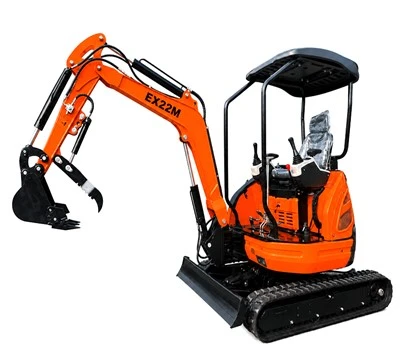
If you’re in the market for a tamping rammer—whether you’re a contractor looking to add to your fleet, a rental company needing reliable units to rent out, or a small business owner working on paving or landscaping—we have a range of models to fit your needs. Our standard gasoline-powered rammers are built for all-day, heavy-duty work, perfect for commercial construction. For smaller residential or light-duty jobs, we also carry battery-powered rammers that are quiet, low-emission, and easy to maneuver. Whether you need a single unit or a bulk order for a large project, we can help you find the right power source (and the right rammer) for your job. Don’t hesitate to reach out to our team to discuss your specific needs and get a quote tailored to you.
Portable Inverter Generator References:
- Construction Equipment Association. (2021). Compact Compaction Equipment: Operator and Maintenance Guide.
- American Society of Mechanical Engineers. (2019). Design of Small Reciprocating Engines for Construction Equipment.
- National Ready Mixed Concrete Association. (2020). Compaction Best Practices for Trench and Foundation Work.
- European Committee for Standardization. (2022). Safety Requirements for Portable Construction Compaction Equipment.
Evoxpower Technology
Evoxpower Technology is one of the most professional tamping rammer manufacturers and suppliers in China, featured by quality products and good service. Please rest assured to buy the newest tamping rammer in stock here and get pricelist from our factory. Contact us for customized service and OEM service.
Address: 11 Fortune Avenue, Yubei District, Chongqing, China
E-mail: stephen@allrightpower.com
WebSite: https://www.evoxpower.com/
