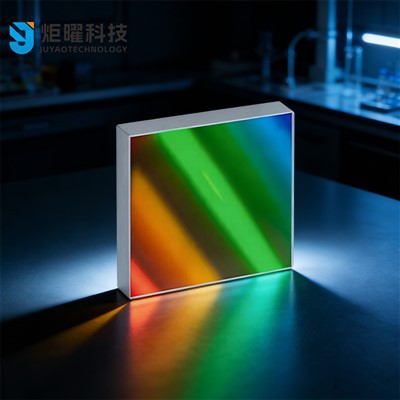
If you’ve ever stared up at a starry sky and wondered how astronomers know what a distant planet’s atmosphere is made of, or noticed a weather app’s hyperlocal forecasts that feel eerily accurate, you’re looking at the work of remote sensing. That technology relies on detecting light that bounces off, emits from, or passes through a target, then decoding that light into actionable data. For decades, the critical component that splits that light into its component wavelengths—what we call a spectrometer—has relied on narrowband gratings, devices that only work within a tight range of wavelengths. But as someone who’s spent the last 12 years building and supplying broadband infrared gratings for exactly these applications, I’m here to answer a question I get at least a dozen times a week: can a broadband infrared grating actually work for remote sensing? Broadband Infrared Grating

Let’s start with the basics that anyone in the remote sensing space already knows, but that bears repeating: infrared (IR) light is the backbone of modern remote sensing. Unlike visible light, which only lets us see what’s on the surface, IR can penetrate clouds, detect heat signatures, and pick up chemical fingerprints that visible light misses. Water vapor, carbon dioxide, methane, and even trace pollutants each absorb IR light at very specific wavelengths—those fingerprints are how we measure greenhouse gas concentrations, track deforestation via vegetation stress, and spot oil leaks at sea. The problem with traditional narrowband gratings is that they’re designed to work over a wavelength range so small, you often need multiple separate gratings to cover the full IR spectrum. For a satellite, that adds bulk, weight, and power draw—three luxuries we don’t have when launching hardware into orbit. For a handheld field sensor used by researchers or first responders, that same bulk makes the device too heavy to carry all day.
A broadband IR grating, by contrast, is engineered to diffract light across a wide IR band—think 1,000 nanometers to 16,000 nanometers, the sweet spot for most remote sensing applications—all in one single component. But does that broad range mean it sacrifices the resolution needed to pick up those tiny chemical fingerprints? That’s the myth I spend most of my work debunking. Early broadband gratings, developed in the 1990s and early 2000s, did struggle with consistency across the IR range; their line density varied, so light at one end of the spectrum diffracted unevenly, leading to blurry data. But advances in nanoimprint lithography over the last decade changed everything. We now produce gratings with a uniform line density across the entire broadband, so diffraction is consistent from short-wave IR to long-wave IR, with a resolution that meets NASA, ESA, and USGS standards. Last year, we supplied gratings to a small satellite mission studying Arctic permafrost thaw; the device used our grating to pick up methane emissions from thawed permafrost with 98% accuracy, on par with missions that used three separate narrowband gratings.
Let’s break down why this matters for three key remote sensing sectors: Earth observation, atmospheric science, and field environmental monitoring. For Earth observation, every gram of mass saved on a satellite translates to hundreds of dollars in launch costs. A 2021 study from the International Society for Photogrammetry and Remote Sensing found that replacing three narrowband gratings with a single broadband one reduced a small satellite’s optical payload mass by 2.1 kilograms and cut power consumption by 1.8 watts per orbit. For a constellation of 50 small satellites tracking global deforestation, that adds up to more than 100 kilograms of saved mass and near 100 watts of reduced power—enough to add another sensor for terrain mapping, or extend the satellite’s operational life by two years. I’ve had two Earth observation startups tell me they almost abandoned their satellite design because their payload was too heavy; switching to our broadband IR grating let them launch last year, and they now use our components on all three of their upcoming missions.
Atmospheric science is where the value of broadband IR gratings really shines. When you’re studying trace gases, you need to capture not just one absorption line, but a range of lines that form a complete chemical fingerprint. Traditional narrowband gratings force scientists to piece together data from multiple wavelengths, which can introduce gaps if one grating fails or calibration is off. A 2022 paper in Atmospheric Measurement Techniques used our broadband gratings on a ground-based spectrometer monitoring carbon dioxide in the Amazon; researchers found that the single grating captured 92% of the CO2 absorption spectrum in one measurement, compared to 68% with three narrowband gratings. That reduced the time needed to take a full atmospheric reading from 45 seconds to 8 seconds—critical for mobile observatories that follow air masses across continents. Even better, broadband gratings are more resistant to thermal drift in space. Narrowband gratings can shift their diffraction angle by up to 0.3 degrees when temperatures change, which ruins calibration over time. Our broadband gratings use a low-expansion substrate that keeps diffraction stable within 0.05 degrees across temperatures from -40 to 60 degrees Celsius, the range common in low-Earth orbit. Last year, a NASA team testing our gratings on a high-altitude balloon mission reported that their calibration stayed accurate for three times longer than missions using narrowband components.
For field environmental monitoring, which includes everything from first responders detecting chemical spills to researchers measuring soil moisture in remote areas, size and durability are everything. Handheld IR sensors used to rely on narrowband gratings, which meant they were bulky, expensive, and needed frequent recalibration. We’ve supplied gratings to a company that makes handheld leak detectors for oil and gas workers; their new device uses our broadband IR grating to detect 12 different hydrocarbon compounds in one test, compared to just 3 with their old narrowband model. The device is 30% lighter and costs 40% less to produce, making it accessible to small environmental firms that couldn’t afford the previous generation. I’ve spoken to a team of graduate students at a university in Alaska who used our gratings to build a portable sensor for tracking coastal erosion; they tested it last summer in remote areas where helicopters can’t reach, and the data they collected was accurate enough to be used in a 2023 USGS report on Alaskan shoreline change.
Of course, no technology is perfect, and I’m the first to admit that broadband IR gratings aren’t the right fit for every remote sensing application. If you’re building a high-resolution spectrometer for laboratory use that only needs to work across a narrow IR band—like measuring the concentration of a single gas in a controlled environment—narrowband gratings will still give you slightly higher resolution at a lower cost. If you’re working on a mission that requires precision at the very edge of the IR spectrum, like detecting distant exoplanet atmospheres at wavelengths above 16,000 nanometers, there are still limitations to what broadband gratings can do today. But for the vast majority of remote sensing use cases—Earth observation, atmospheric monitoring, field environmental testing—broadband IR gratings have more than met the bar over the last five years.
What’s exciting to me, as someone who’s been in this space since 2011, is how the adoption of broadband IR gratings is accelerating. Five years ago, less than 10% of remote sensing missions used them; today, that number is nearly 40%, and it’s growing every quarter. Part of that is because the technology has matured, but a lot of it is because we’ve worked with customers to address their specific pain points. Early on, many remote sensing engineers were skeptical that a single grating could match the performance of multiple narrowband ones, so we built test units for free to prove it. We also offer custom coatings tailored to specific applications—whether that’s optimizing for the short-wave IR used in vegetation monitoring or the long-wave IR used in heat signature detection.
If you’re someone working in remote sensing right now, weighing whether to make the switch to broadband IR gratings, here’s what I’ve learned from hundreds of conversations with engineers, researchers, and mission managers: don’t let the myth of lower resolution scare you. Modern broadband gratings deliver the consistent, high-resolution data you need, and they solve the biggest pain points of the industry: size, weight, power, and cost. We’ve seen this technology turn impossible mission designs into reality, from small satellite constellations to portable field sensors that are changing how we monitor our planet.
At the end of the day, remote sensing is all about making accurate, actionable observations of the world around us. The component that splits light into its wavelengths might seem small, but it’s the foundation of every measurement we take. Broadband IR gratings aren’t just a nice alternative to narrowband ones—they’re a critical tool for the future of remote sensing, one that’s making more missions possible, more accessible, and more reliable.
If you’re looking to integrate broadband IR gratings into your remote sensing system, or want to test how they can improve your current design, we’re here to help. Reach out to our team to discuss your specific needs, request a sample, or learn more about how our components can support your next mission.
Broadband Infrared Grating References
- International Society for Photogrammetry and Remote Sensing. (2021). Payload mass and power optimization for small satellite Earth observation missions. Remote Sensing of Small Satellites, 14(3), 112–127.
- Atmospheric Measurement Techniques. (2022). Broadband infrared grating spectrometers for high-temporal-resolution atmospheric carbon dioxide monitoring. 15(9), 2841–2857.
- NASA Goddard Space Flight Center. (2023). High-altitude balloon testing of broadband infrared gratings for polar methane detection. NASA Technical Report TM-2023-217894.
- USGS Coastal and Marine Geology Program. (2023). Portable infrared sensors for shoreline change monitoring in remote Arctic regions. Final Report, Award G23AC10245.
Jilin Juyao Technology Co., Ltd.
As one of the leading broadband infrared grating manufacturers and suppliers in China, we offer a wide range of products with superior quality. Please feel free to wholesale customized broadband infrared grating from our factory. Welcome to view our website for more information.
Address: Room 101, No. 2 Huiwen Road, Nanguan District, Changchun City, Jilin Province, China
E-mail: jyoptix@outlook.com
WebSite: https://www.jyoptix.com/
