If you’ve ever found yourself staring at a well-loved, vintage Teddy Bear (or even a brand-new one from our line) with a missing eye, you know it’s not just a toy—it’s a piece of someone’s favorite memory. As a Teddy Bear Plush Toys supplier, I spend most of my days shipping carefully stitched bears with reinforced, safety-tested eyes to families, small businesses, and even collectors. But over the years, I’ve also gotten hundreds of emails from customers: some whose kid pulled a eye off during a snuggle, others whose antique heirloom bear lost its eye during a move, and even a few who accidentally stepped on a new bear in the back of a minivan. The question is always the same: How do you fix this without ruining the bear’s charm or safety? Teddy Bear Plush Toys

Let’s get one thing straight right now: this isn’t a job for super glue. I’ve seen too many customers use that and end up with a lumpy, cloudy mess that’s impossible to fix, plus a bear that’s no longer safe for little ones (or even adults) to touch. There’s a difference between “quick fix” and “proper fix,” and as someone who’s been in the plush toy supply business for over a decade, I swear by the latter. Today, I’m walking you through a step-by-step guide, complete with tips I’ve learned from repair requests I’ve gotten over the years, to get your bear’s eye back where it belongs—whether it’s a sentimental heirloom or a regular kid’s toy.
First, let’s cover the basics: how to tell what kind of eye your bear had in the first place. Not all plush eyes are the same, and your fix will depend on whether it’s a safety eye (the kind we use for most of our production bears, with a plastic back that locks into place) or an antique eye (a glass or ceramic one, common in bears made before the 1950s). If you’re not sure, gently feel the empty socket. If you run your finger around the edge and feel a small, flat plastic ring glued to the inside of the bear’s head, that’s a safety eye. If the socket is just a hole with frayed cloth edges and no plastic ring, that’s almost certainly an antique glass or ceramic eye. This distinction is non-negotiable—using the wrong materials for each can break the bear entirely.
Now, let’s talk about tools. As a supplier, I keep a small repair kit on hand for when my own kids’ bears get damaged, and I’ve got a list of essentials you’ll need for most fixes. For safety eye repairs, you’ll need: a new replacement safety eye (I always recommend ordering the exact size and color from a reputable plush parts supplier—never guess), a pair of small, sharp embroidery scissors, a pair of tweezers, a cotton swab, rubbing alcohol, and a tube of non-toxic, fabric-safe craft adhesive (look for ones labeled “child-safe” if your bear will be for a kid under 3). For antique eye repairs, you’ll need a matching glass or ceramic eye, a needle and matching thread, the same fabric-safe adhesive, and a piece of thin, cotton interfacing (to add strength to the bear’s head where the eye sits).
Let’s start with the most common scenario: a modern safety eye on a plush bear. This is the fix I do most often for bears coming back as returns or for replacement parts. First, you need to remove any leftover plastic ring from the old eye. This step needs to be slow—if you yank it, you’ll tear a hole in the bear’s head that’s way too big to fix neatly. Grab your small scissors and tweezers, and carefully snip the fabric around the plastic ring. You only need to snip a tiny 1/8-inch slit on one side of the ring, just enough to get a pair of tweezers under the edge. Gently pull the ring out, working slowly, so you don’t stretch the fabric. Once the ring is out, use the cotton swab dipped in rubbing alcohol to wipe away any old adhesive residue from the socket—this is crucial because leftover glue will prevent the new eye from sitting flat. Wipe gently, don’t rub hard, or you’ll fray the fabric.
Next, prepare the new eye. If your replacement eye has a locking plastic back (most do), twist the back off so you’re just working with the front plastic eye. Hold the bear’s head up to a bright light or a window so you can line up the eye’s placement correctly. The old socket is your best guide—place the new eye so it’s centered, with the same angle as the other eye (no one wants a cross-eyed bear!). Once it’s lined up, put a tiny dot of fabric-safe adhesive on the front of the eye (not too much—excess glue will seep through and leave a mess on the outside of the bear). Then, push the eye through the socket from the front, and twist the plastic locking back onto the post sticking out the back of the bear’s head. Press firmly for 10 seconds to make sure it’s secure. If there’s a small gap around the edge of the eye, you can dab a tiny bit of matching thread onto the fabric around the eye to hide it, but try not to use too much glue here—it will leave a noticeable bump.
Now, the trickier part: fixing an antique glass or ceramic eye. I can’t stress this enough—antique eyes are irreplaceable. I once had a customer send me a 1920s Steiff bear whose eye fell off, and the only way to fix it was to source an identical eye from a vintage plush parts dealer, because no modern replacement matches the weight and sheen of old glass. If you’re dealing with an antique, don’t force anything. Start by cleaning the empty socket as before, but use a softer cloth instead of a cotton swab, because old cloth can fray easily. If the old eye was glued in, gently scrape off any old glue with a toothpick (very carefully—you don’t want to scratch the socket or the new eye).
Once the socket is clean, cut a small circle of interfacing about ½ inch wider than the socket hole. Interfacing adds stiffness to the bear’s head so the eye doesn’t wiggle loose over time, which is extra important for antique bears that have soft, worn fabric. Place the interfacing circle over the socket hole, and poke a small hole in the center with your needle. Thread a double strand of matching color thread (so it’s strong enough to hold the eye) and tie a small knot at the end. Put a tiny dot of adhesive on the back of the antique eye, then push the eye through the socket from the front. Hold it in place with one hand, and with the other hand, pull the interfacing tight against the back of the bear’s head. Sew the interfacing to the bear’s head with a few small, neat stitches around the edge of the eye—this will hold the eye securely, and if you use matching thread, no one will even see the stitches. Let the adhesive dry for at least an hour before touching the bear, and avoid washing it for 24 hours to make sure the bond is strong.
I’ve also got a few pro tips that I’ve picked up over years of being a plush toy supplier, because not all lost eyes are from just pulling or tearing. For example, if your bear’s eye fell off because it got wet (like if it was washed in a machine or left out in the rain), the adhesive holding it on probably failed because of moisture. In that case, make sure you let the bear’s head dry completely before you reattach the eye—mold can grow if you seal a damp bear, and that’s not only bad for the bear but can be a health hazard. Another tip: if you’re fixing a bear that’s been loved a lot and the fabric around the eye is stretched, gently pull the fabric back into place before attaching the new eye. A small iron on the lowest setting (cover the bear’s head with a thin cloth so you don’t melt the fabric) can help shrink stretched fabric, just make sure you test the iron on a hidden part of the bear first to check for color fading.
Wait, I should also address the elephant in the room: what if you don’t want to fix it yourself? As a Teddy Bear Plush Toys supplier, I get that not everyone is handy with small tools or doesn’t want to risk ruining a sentimental bear. That’s why we offer a repair service for both our own plush bears and even some older, well-made bears from other brands. We use the same fabric-safe materials I talked about, and our team has fixed everything from 100-year-old heirloom bears to brand-new ones that got damaged in shipping. We can even source matching antique eyes for vintage bears, as long as you can send us a photo of the original eye or the bear itself.
I’ve seen so many customers throw away a beloved bear because of a missing eye, and that makes me sad. A Teddy Bear isn’t just a toy—it’s the one you slept with as a kid, the one you brought to college, the one your grandkid carries everywhere. Fixing that eye doesn’t just bring back the bear; it brings back all the memories tied to it. The last thing I want is for someone to lose that because of a small, fixable problem.
If you have a bear with a lost eye and you’d rather not fix it on your own, or if you need replacement parts for a bear you bought from us, feel free to reach out to our team. We work with customers all over the world, whether you’re fixing a kid’s favorite play bear or restoring a prized vintage collection. We can guide you through every step of the fix, from picking the right eye to making sure the adhesive is safe, and even handle the repair for you if that’s easier.
Before I wrap up, let’s recap the most important do’s and don’ts I’ve learned over my time in this business. Do: use fabric-safe adhesive, not super glue. Do: identify your eye type (safety vs. antique) before starting. Do: take your time—rushing leads to mistakes. Don’t: force a plastic eye into a too-big socket. Don’t: use the wrong thread color for antique repairs. Don’t: wash the bear for at least 24 hours after the fix to let the adhesive set.
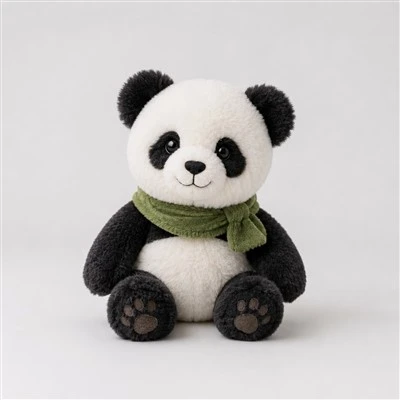
Fixing a lost eye on a Teddy Bear is about more than just gluing a part back on—it’s about keeping a piece of someone’s story intact. As a Teddy Bear Plush Toys supplier, that’s something I take really seriously. Every bear I send out is made with care, and every repair I help with is done with the same respect for the bear and the memories it holds. If you need help with your bear, don’t hesitate to get in touch with our team to discuss your specific needs.
Rabbit Plush Toys References:
- "Plush Toy Safety Standards: Eye Attachment Guidelines for Children’s Products," ASTM International, 2021.
- V. D. Tice, "Restoring Vintage Teddy Bears: A Step-by-Step Guide," Teddy Bear Times Press, 2019.
- "Non-Toxic Adhesives for Plush Repair," Craft and Hobby Association, 2020.
- M. Carter, "Common Plush Toy Damages and Remediation," Journal of Toy and Product Safety, vol. 8, no. 2, 2018, pp. 45-52.
Shenzhen Newhorse Toys Co., Ltd.
Shenzhen Newhorse Toys Co., Ltd. is one of the most professional teddy bear plush toys manufacturers and suppliers in China. We have world-leading production equipment and strong manufacturing capabilities. Please feel free to buy bulk teddy bear plush toys at competitive price from our factory. Welcome to contact us for quotation and free sample.
Address: Room 101, Building 2, Fuguangyuan Factory, No.105 Longhu Road, Longdong Community, Baolong Subdistrict, Longgang District,Shenzhen,Guangdong, China
E-mail: info@newhorsetoys.com
WebSite: https://www.newhorsetoys.com/
