Hey there – let’s cut the fluff here because if you’re reading this, you’re probably either a transport manager stressing about loading your double car carrier trailers for cross-state runs, or maybe a fleet owner who’s tired of the extra damage bills from lopsided loads. I’m not some stuffy engineer in a lab coat – I’m the guy who’s spent the last 12 years building double car carrier trailers and standing side-by-side with drivers during their first load, seeing firsthand where mistakes happen that end up costing people time, money, or worse. Car Carrier Double Trailer
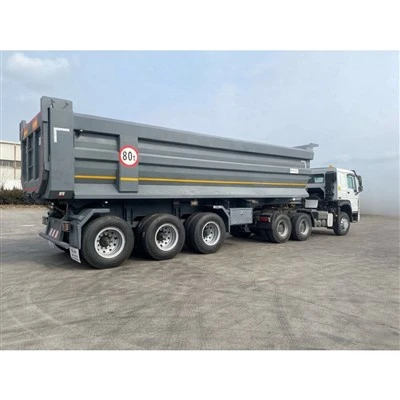
First off, let’s get one thing straight: loading a double car carrier safely isn’t just about “parking cars and strapping them down.” This isn’t your average pickup bed with a couple of sedans tied to the sides. A double car carrier is two separate trailers – the lead (or dolly) trailer and the rear trailer – linked by a fifth wheel and a gooseneck, right? One tiny mistake on weight distribution here, and you’ll be fishtailing down the highway at 60 mph, or worse, tipping over when you hit that slight curve on I-95 north of Baltimore. I’ve seen it too many times: a driver loads all the heavier trucks in the back trailer because he thought it was easier to reach, and the whole rig veered off the road in a rainstorm. No one got hurt, but that $18k repair bill for the trailer and the three cars that got totaled? That’s avoidable.
Let’s start with the basics before we even get a single car onto the deck. I always tell my clients: pre-flight the trailer before you load. Sounds like a pilot thing, but it applies here. First, check the tire pressure on both the lead and rear trailers – underinflated tires throw off weight distribution and can cause blowouts mid-load. I once had a driver skip this, and a rear trailer tire blew out when they were 300 miles from home, spilling two half-loaded cars across a rural highway. Then, check the tie-down points: look for rust, bent hooks, or any cracks in the railings. These are rated to hold thousands of pounds, but if they’re compromised, even a good strap won’t save your car (or your job). Also, level the trailers. You don’t want one side sitting lower than the other – that’ll make your straps pull unevenly, and your cars could slide. Most loading yards have those little level pads, so use ’em. Don’t just guess.
Now, the big one: weight distribution. This is where most new drivers (and even some vets) mess up. For double car carriers, the rule of thumb (and it’s not some random rule – it’s from FMCSA, which is the US Department of Transportation’s transport safety folks) is that 60% of the total load weight should go on the lead trailer, and 40% on the rear trailer. Wait, why? Because the lead trailer is connected to the cab, so it has more steering control. If you put too much weight on the rear trailer, you overload the rear axles, and the lead trailer can get light at the back – making it hard to steer, especially in wind or when you’re braking hard. I’ve had clients argue with me about this, saying their “guy” says the rear can hold more. No, that “guy” probably didn’t build double trailers for a living. He’s a dispatcher who’s never sat behind the wheel of one of these rigs.
Within each trailer, too, you’ve got to break it down. Heavier vehicles – think pickup trucks, SUVs, vans, not tiny sedans – go as far forward in each trailer as possible. For the lead trailer, that means the heaviest cars go in the first row of that trailer, near the gooseneck. For the rear trailer, heavy cars go in the first row of the rear trailer, near the fifth wheel that connects it to the lead. Lightweight cars – sedans, compacts, maybe even electric cars if they’re lighter (wait, no, EVs are actually heavier now, oops, scratch that) – go toward the back of each trailer. Why? Because if you have a heavy car at the back of the rear trailer, that’ll make the whole rear end of the rig swing out when you turn. I remember one client who loaded a couple of half-ton pickups at the very back of the rear trailer for a “full” load, and when they merged onto the turnpike, the rear trailer swerved so hard that it clipped a semi. Totaled three cars, damaged both trailers. All because they didn’t pay attention to weight positioning within each deck.
Next up: strapping. This is the part that looks simple on YouTube tutorials, but do it wrong and you’re looking at cars flying off the trailer if you hit a pothole or a sudden stop. First, never use just one strap per car. I don’t care if it’s a tiny compact – use at least four straps: two on the front, two on the rear. Wait, but how tight is tight? A common mistake is over-tightening straps, which can warp a car’s frame or even crack the bumper. Under-tightening? Well, that’s obvious – movement. I use a simple trick I’ve had drivers use for years: tighten each strap until there’s no more slack, then give it one good yank with the ratchet. If the strap doesn’t move, you’re good. Also, make sure the straps are positioned on the reinforced parts of the car’s frame – not the bumper, not the door jamb, not the gas tank or exhaust. Most cars have those little reinforced loops under the front and rear, right there for trailer straps. Use those. I once saw a driver hook a strap to a car’s door handle, and when they hit a rough spot, the handle ripped off, the car rolled into another one, and they had to unload the whole trailer to fix it. That’s a waste of time that could’ve been avoided.
Another strapping tip for double trailers specifically: when you’re loading the second (rear) trailer, make sure the straps don’t cross over the gap between the two trailers. Wait, why? Because when the rig turns, the two trailers pivot, and a strap that’s stretched tight across that gap will snap. I’ve seen that too – a driver loaded a car in the rear trailer with a strap that ran across the fifth wheel gap, and when they turned onto a side road at 25 mph, the strap snapped, sending the car’s rear end bouncing into the lead trailer. Ruined two cars and dented the lead trailer’s side. Don’t do that. Lay straps along the side of each trailer, not across the middle gap between the two.
Then there’s the “gap” between cars on the same deck. I know some drivers like to pack cars as tight as possible to fit more, but here’s the thing: if you hit a sudden stop, a car that’s too close to the one in front will smash into it. FMCSA recommends at least 6 inches of space between the bumpers of adjacent cars. Even 6 inches is enough – more if you’re carrying heavier trucks. I’ve had clients complain that 6 inches wastes space, but let’s do the math: if you have 8 cars on a double trailer, that’s 48 inches total – 4 feet – of space. You can fit an extra car if you cram them, but is saving one car worth risking seven? Last year, I heard about a fleet that crammed 8 cars into a double trailer with no gap, hit a deer on the highway, and all 8 cars smashed together. Total loss of $120k. That’s way more than the cost of fitting 7 instead of 8, and the repair for the trailer.
Wait, what about electric vehicles? I know a lot of clients are moving to hauling EVs now, and there’s a specific thing you’ve got to do for those. EVs are way heavier than gas cars, right? (A Tesla Model Y is like 4,500 lbs, a similar-sized gas SUV is like 3,800 lbs.) So their weight goes into that 60/40 split, obviously, but also, their battery is under the floor. That means when you strap them, you’ve got to make sure the straps are positioned low, on the frame, not on the higher body parts. Also, some EVs have specific tie-down points recommended by the manufacturer – don’t ignore those. I had a driver who didn’t check the manual for a Ford F-150 Lightning, strapped it to the frame rail that’s actually only for lifting, not securing, and when he hit a strong crosswind, the car shifted enough to scratch the paint on the car next to it.
Now, the post-load check. This is the part no one wants to do, but it’s the most important. After you load all the cars, walk the entire double trailer twice. First, check each strap – make sure they’re all tight, no slack, no twists (twisted straps are weaker, by the way, they can snap under pressure). Then, check the space between every car – make sure none have shifted. You can even gently nudge each car with your shoulder; if it moves, your straps are too loose or the gap is too small. Then, do a quick check of the rear trailer’s landing gear and the lead trailer’s fifth wheel – make sure everything is locked in, no loose parts. I always tell drivers to do this check before they even hook up to the cab, because if you have to fix a strap, it’s way easier to do when the trailer is on the ground, not raised on landing gear.
Wait, also, weather? If you’re loading in the rain, wait for the cars to dry a little before strapping them. Wet bumpers or tires can make cars slide, even if the straps are tight. I’ve had a driver load cars in a light drizzle, and when he accelerated onto the highway, a sedan slid backward because the bumper was wet, knocking the strap loose. The car slid into the next one, and they had to pull over and unload half the trailer. Worth waiting 10 minutes for the cars to dry? Absolutely.
Let’s get real here – I’m not selling you some magic trick to load double trailers. I’m telling you what works, because I’ve been around these trailers for years, I’ve seen the mistakes, I’ve helped fix the messes. A lot of people in this industry will tell you “it’s easy, just do X” but they’re not the ones responsible when something goes wrong. My double car carrier trailers are built with reinforced tie-down points, weight distribution guidelines built into the deck, and extra space between rows so you don’t have to cram cars. But even the best trailer won’t save you if you load it wrong.
If you’re tired of dealing with damage bills, fines from the DOT (wait, yeah, FMCSA does check weight distribution – you can get fined if you’re over the limit, or if weight is improperly placed), or the stress of every run where you’re worried your load will shift, let’s talk. I can walk you through the step-by-step loading process for our double trailers, answer any questions you have about weight distribution, strapping, or anything else, and make sure you’ve got the tools to keep your drivers and your cargo safe. There’s no sales pitch here that’s not honest – I’ve been in this long enough to know that happy clients come from knowing they can count on their trailers and their loads, not just a quick sale.
Wait, just to wrap up – let’s recap the non-negotiables, because I know you skimmed: 1) Pre-check the trailer (tires, tie-downs, level) before loading. 2) Stick to 60% lead, 40% rear weight split. 3) Heaviest cars forward in each trailer, lightest at the back. 4) Four straps per car, on reinforced frame points, no crossing the gap between trailers. 5) 6+ inches between car bumpers. 6) Double check all straps and car positions after loading. That’s it. That’s the formula. Skip any of these, and you’re rolling the dice.
If you need help with your double car carrier setup, or have questions about loading for specific types of vehicles (including EVs, trucks, vans), hit me up. No pressure, no awkward sales calls, just real talk about keeping your operations running smooth and safe.
Flatbed Trailer References:
- Federal Motor Carrier Safety Administration (FMCSA). (2022). Cargo Securement Standards for Commercial Motor Vehicles. U.S. Department of Transportation.
- National Highway Traffic Safety Administration (NHTSA). (2021). Safety Guidelines for Hauling Heavy Electric Vehicles. U.S. Department of Transportation.
- Truckload Carriers Association (TCA). (2020). Best Practices for Double Trailer Loading and Operation. Truckload Carriers Association.
Qingdao Leonmec Mechanical Co., Ltd.
As one of the most professional car carrier double trailer manufacturers and suppliers in China, we have world-leading production equipment and strong manufacturing capabilities. Please feel free to buy durable car carrier double trailer made in China here from our factory. For price consultation, contact us.
Address: ROOM 903, BUILDING 3 NO.480 JIANGSHAN SOUTH ROAD HUANGDAO DISTRICT (FORMER ECONOMIC & TECHNOLOGICAL DEVELOPMENT ZONE) QINGDAO CITY, SHANDONG PROVINCE P.R.CHINA
E-mail: info@leonmec.com
WebSite: https://www.leonmec.com/
