If you’ve ever pulled up to a gas station and spotted that wobbly-looking water pump right next to the gas nozzles, you’ve probably never stopped to think: “Wait, does that thing need to be explosion proof?” Let’s cut through the jargon and talk about this because for us, as a go-to explosion proof gas station equipment supplier, this isn’t just a technical question—it’s the difference between keeping people safe and rolling the dice on a really bad day. Explosion Proof Gas Station
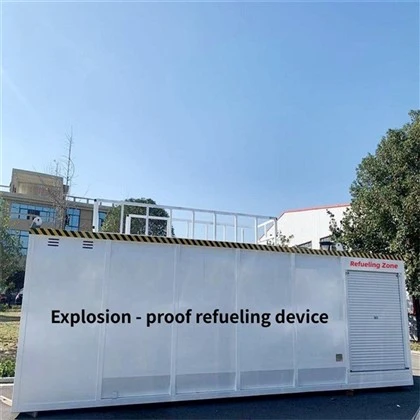
First, let’s get one thing straight: Gas stations aren’t like a grocery store with a water fountain by the deli. The air around them is thick with invisible, flammable stuff. Gasoline vapors escape every time you fill up, even when the pump’s “sealed tight.” At room temperature, those vapors are heavier than air, so they sink to waist level around pumps, under parked cars, and even into the tiny gaps between gas station canopies. If that mix hits a spark, a tiny flame, or something that gets hot enough to ignite it? Boom. No exaggeration here—gas station explosions are a real, recorded thing, not a movie plot.
That’s where regular water pumps mess up. A standard residential or commercial water pump has electrical parts—motors, switches, cords—that can arc, spark, or overheat. Let’s say you’re rubbing a rubber balloon on your jacket and it builds up static electricity. That little zap? It’s enough to ignite gas vapors. A regular water pump doesn’t have anything to stop that. If that pump is sitting next to gas pumps, it’s a ticking time bomb.
Now, let’s talk about what “explosion proof” actually means, because a lot of people think it’s some kind of unbreakable metal box, and while that’s part of it, it’s more nuanced. Explosion proof equipment isn’t just “can survive an explosion”—it’s built to contain any spark, arc, or heat inside its casing so it doesn’t set off the flammable stuff outside. For a water pump, that means every single electrical component is sealed tight. Switch contacts are enclosed so no tiny spark gets out. The motor’s housing is made of sturdy metal that can hold a small internal flame, and the heat it generates is kept way below the ignition temperature of gasoline vapors. We design our pumps to meet industry standards—you know, the ones that actually exist, not made up stuff—so they don’t play fast and loose with safety.
Let’s get real: I’ve worked with gas station owners for years, and I’ve heard every pushback. “My current water pump works fine, why fix it?” Here’s the thing: It’s not about if it works right now. It’s about if it works when you least need it to. One of our customers was a small station in a small town that had a regular water pump for 5 years. One hot summer day, a customer turned on the pump to fill a bucket, and the motor overheated. The vapors from the gas pumps next to it (the owner had just refilled the underground tanks that morning, so the air was extra thick) ignited. The pump housing contained the fire inside, so it didn’t spread to the gas lines or the station canopy. No one got hurt, and the station only had to replace the pump, not rebuild half the lot. That’s the kind of story that makes this stuff matter.
Another common question: “Do I need this for a small, rural station, or just the big ones?” Here’s the truth—no size matters when it comes to gas vapors. A tiny station with one gas pump and one water pump has the same risk as a truck stop with 20 pumps. Vapors don’t care if there’s 5 cars or 50. We’ve installed our explosion proof water pumps at everything from 2-pump corner stations to interstate truck stops, and every single owner told us it was the best upgrade they ever made. One truck stop owner even said he saved on insurance after switching—because insurance companies know explosion proof equipment lowers risk.
Wait, let’s break down the science a little more, because I don’t want to just say “it’s safe.” Gasoline’s flashpoint is around -45 degrees Fahrenheit. That means at any temperature above that (which is literally every temperature on Earth where people run gas stations), it gives off vapors that can mix with air. The right mix is between 1.4% and 7.6% vapors in air—any less, and there’s not enough fuel to ignite; any more, and there’s too much. But even a partial mix can catch fire if there’s a ignition source. Regular water pumps don’t have a way to test or prevent that ignition. Our explosion proof pumps do—they’re rated for Class I, Division 1 locations, which is exactly the area where gas vapors are present 24/7 at gas stations.
I know, Class I, Division 1 sounds like a bunch of alphabet soup, but that’s just industry shorthand for “this is a place where flammable gases are usually present.” The National Fire Protection Association (NFPA) has standards for this, by the way—they’re the ones who write the rules that firefighters and code officials follow. And guess what? The NFPA now recommends explosion proof equipment for all dispensable water pumps at gas stations. It’s not just a good idea anymore—it’s best practice.
Let’s talk about cost, because I know that’s a big one. A lot of people think explosion proof stuff is way pricier, but here’s the catch: the alternative is way more expensive. If you have a fire or explosion at your station, you’re looking at lawsuits, repairs, lost income while you rebuild, maybe even losing your business. We’ve done the math: our pumps are priced so they pay for themselves in about a year from lower insurance, no downtime, and peace of mind. Plus, they last longer—because the sealed housing keeps dirt, water, and gas vapors out, so the motor doesn’t corrode. A regular water pump might last 3 years; our explosion proof ones last 7 or 8. That’s a win-win.
I’ve also seen people try to “hack” regular pumps to make them safe. Like, wrapping them in plastic, or moving them 10 feet away from gas pumps. But here’s the problem: gas vapors spread. A 10-foot gap might seem like a lot, but on a windy day, those vapors can travel farther. Plastic wraps tear, cords fray, and even if you move the pump, the parts that power it—like the outlet plug, which is usually outside the pump itself—are still in the vapors. You can’t hack your way to safety. You need equipment that’s built for the environment it’s in.
We don’t just sell pumps, by the way. We work with you to figure out where to put them, how to wire them, and even help with code inspections. A lot of our customers aren’t super tech-savvy when it comes to electrical stuff, so we walk them through every step. No confusing manuals, no hidden fees, just straight talk. I remember a customer who owned a station and had never installed any electrical equipment beyond a light bulb. We sent a technician to help him, showed him how to test the pump, and even gave him a cheat sheet for basic maintenance. That’s the kind of support we’re about.
Let’s circle back to the original question: Do gas station water pumps need to be explosion proof? The short answer is yes—for safety, for compliance, and for the long-term health of your business. It’s not just a trend, it’s a standard. The vapors at a gas station are always there, and the last thing you want is a tiny spark turning into a disaster that could’ve been prevented.
If you’re a gas station owner, manager, or operator who’s tired of worrying about your water pump being a risk, or you’re ready to upgrade to something that’s built to last, we’re here to help. We don’t do one-size-fits-all—we work with your space, your budget, and your needs. No pushy sales pitches, no confusing jargon, just answers to your questions and equipment that keeps your station, your customers, and your employees safe.

Get in touch with us to chat through your needs, ask any questions, and get a quote that makes sense. We’re ready to help you make the right call for your business.
Double-walled Tank References:
- National Fire Protection Association (NFPA). NFPA 30A: Code for Motor Fuel Dispensing Facilities and Repair Garages. 2021.
- Occupational Safety and Health Administration (OSHA). Electrical Safety-Related Work Practices. 29 CFR 1910.331-1910.335.
- International Code Council (ICC). International Fuel Gas Code. 2021.
- American Petroleum Institute (API). Recommended Practice for Classification of Locations for Electrical Installations at Petroleum Facilities. API RP 500.
Shandong Jingcai Industry and Trade Co., Ltd.
As one of the most professional explosion proof gas station manufacturers and suppliers in China, we also support customized service. With abundant experience, we warmly welcome you to wholesale high quality explosion proof gas station in stock here from our factory. Contact us for free sample.
Address: Caojiazhuang Village Industrial Park, Lingcheng Town, Qufu City, Jining City, Shandong Province.
E-mail: shandongjingcai888@gmail.com
WebSite: https://www.sdjingcaicn.com/
