If you’ve ever stood in a workshop, showroom, or product line and wondered where that crisp, durable metal nameplate came from—one that doesn’t fade after a year in rain, doesn’t scratch off with everyday handling, and matches a brand’s exact aesthetic—you’re not alone. As a metal nameplate supplier who’s walked through dozens of client conversations, I can tell you: ordering metal nameplates isn’t just about picking a size and hitting “buy.” It’s a mix of technical clarity, material know-how, and small, often overlooked details that turn a basic label into a part that protects brand identity, complies with regulations, and lasts for decades. Over the 12 years I’ve spent in this space, I’ve seen new clients overpay for a plate that doesn’t fit their needs, and veteran clients come back time and again because we got every step right. Today, I’m breaking down exactly how to order metal nameplates, from the first question to the final delivery, with no jargon, just real-world advice I’ve learned from the factory floor. Metal Nameplate
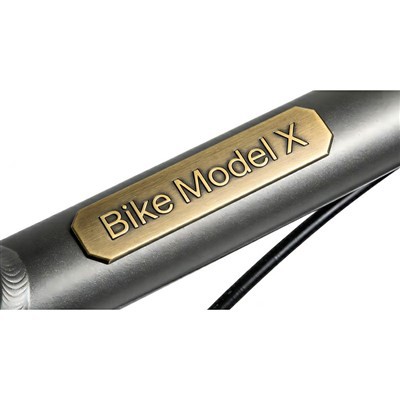
Let’s start with the most foundational choice: material. This is where most first-time clients guess, and it’s a costly mistake. Metal nameplates aren’t one-size-fits-all, and picking the wrong material can ruin a product before it even reaches the customer. Let’s cut through the noise of common materials and what they’re actually used for. First, stainless steel is the workhorse of the industry. It’s rust-resistant, tough, and works for everything from outdoor equipment (lawn tractors, solar panel frames) to industrial machinery, even marine applications if you spring for 316-grade (which handles saltwater way better than 306, wait, 316, right, my bad, that’s the one). We use stainless steel for 60% of our orders because it balances durability and cost perfectly. Then there’s aluminum—light, easy to shape, and cheaper than stainless, but it’s not for heavy outdoor use. I see clients reach for aluminum because it’s light, but if it’s going on a gate that sits in rain year-round, aluminum will corrode in 18 months. It’s great for indoor signs, appliance labels, or products that move around a lot (like tool cases) where weight matters. Brass is another go-to, but it’s more decorative than functional. It has that warm, classic gold tone, so it’s perfect for luxury goods—high-end kitchen appliances, door hardware, furniture. The catch is brass tarnishes over time unless you seal it with a clear coat, which we can do for an extra few cents per plate. For clients looking for something budget-friendly, galvanized steel works for temporary applications or items that won’t see extreme weather, though it’s not a long-term solution. The biggest tip here: don’t just pick a material because it’s cheap. Ask yourself two questions: Where will this plate live? And what will it be exposed to? If it’s on a commercial refrigerator that runs 24/7 in a warehouse, stainless steel is non-negotiable. If it’s on a custom coffee maker that stays indoors, aluminum or brass will work just fine.
Next, you need to nail the design details, and this is where the “small things” make all the difference. I can’t tell you how many times a client has sent us a blurry logo file, or a font that’s too thin to etch cleanly, and we end up back and forth for days correcting it. Let’s break design down into three parts: content, shape, and finish. First, content. Do you just need a brand name? Or do you need serial numbers, safety warnings, electrical specs, or barcode scannability? For serial numbers, we recommend either laser etching or embossing, because those processes make the number recessed or raised enough to read and not wear off. If you’re adding barcodes, make sure to specify the type (Code 128, QR, UPC) and size—too small and scanners won’t pick it up. Then shape: most nameplates are rectangular, but some clients want custom shapes—circles, ovals, even die-cut shapes like a guitar for music gear or a car logo for automotive parts. Custom shapes add cost, so factor that in early. If a basic rectangle works, you’ll save 10-15% on the order, no extra work needed. The biggest design mistake I see is font choice: fonts thinner than 1mm will almost always smudge or fade. Stick to bold, sans-serif fonts like Arial, Helvetica, or Roboto for text, and make sure logos are high-res—at least 300 DPI, no more blurry PNGs saved from a website. If your logo only exists in a low-res JPEG, our design team can usually redraw it for a small fee, but it’s way better to start with a vector file (AI, EPS, SVG) if you have it. Now, finish. This is how you make the text or logo stand out. For etching, you can have it sandblast, which leaves a matte, textured look that’s easy to read, or chemical etching, which is super precise for detailed logos. For raised text (embossing), that’s a more premium look—great for luxury brands, but it adds a bit to the cost. We also do powder coating, which lets you paint the metal any color you want, or anodizing for aluminum plates that gives a scratch-resistant, uniform finish. For example, if you want a black stainless steel plate with white text, we can powder coat the steel black, then etch the text so it’s silver underneath. That’s a super clean, durable look that won’t chip.
Once you have material and design locked, it’s time to think about mounting. This is another step people skip, and it leads to plates falling off or looking messy. How will you attach the nameplate to your product? The four most common options are adhesive backing, rivets, screws, and 3M tape. Adhesive is the cheapest, easiest, and best for flat surfaces—like a laptop lid or a plastic appliance. We use industrial-grade 3M adhesive for this, which sticks to metal, plastic, glass, and wood, and it’s resistant to temperature changes, so it won’t peel off in a hot garage or cold warehouse. But if the product will see vibration, movement, or outdoor exposure, adhesive alone won’t work. That’s where rivets or screws come in. Rivets are small metal pegs that go through holes in the plate and get smashed flat on the back, so they hold tight—perfect for construction equipment or gates. We can pre-punch the holes in the plate for you, so all you have to do is hammer or press the rivets in. Screws are similar, but they let you remove the plate later if needed—great for machinery that needs maintenance, where you might need to take the plate off temporarily. The 3M tape option is a middle ground: it’s stronger than regular adhesive, but it’s a thin strip that doesn’t leave big holes in your product, so it’s good for things like furniture or electronics where you don’t want visible hardware. Always tell your supplier how the plate will be mounted before they make it—we can add hole positions, adhesive size, or tape strips during production, which saves you extra work later.
Now, let’s talk about quantity. This is a balance between cost and needs, and it’s one I see clients get wrong all the time. The most economical orders are between 50 and 500 plates. When you order fewer than 50, the setup cost (the time it takes to make the die, set up the laser, or cut the metal) is spread over fewer plates, so the per-plate cost goes up. Order more than 500, and you end up with extra inventory if your demand is inconsistent, which ties up cash. That said, there are exceptions: if you’re a new brand launching a product and only need 10 plates for a small run, we can do that, just know the per-plate cost will be higher. If you’re a large manufacturer with a steady order of 10,000 plates a year, ordering in bulk (1,000 at a time) will save you 20-30% per plate. Also, ask about minimum order quantities—some suppliers won’t do orders under 25, but we work with startups all the time, so we’ll bend for small runs when needed.
Wait, what about regulations and compliance? This is a huge one for industries like automotive, electronics, and medical devices. If your nameplate needs to meet standards like UL certification for electrical products, RoHS for electronics, or FDA requirements for medical devices, you have to specify that upfront. For example, if you’re making a power supply that needs a UL label, we can etch or print the UL mark exactly to their specifications, and the plates will be made with materials that meet UL’s resistance and durability rules. Skipping this step means you might end up with a plate that doesn’t pass inspection, which can delay your product launch or cost you money in rework. We work with a lot of industrial clients, and we always confirm regulatory requirements before starting production to avoid that headache.
Now, the process of ordering itself, from inquiry to delivery, should be straightforward. Let’s walk through what it looks like for a new client: first, you send an inquiry with your needs. Tell us the material, size, design, quantity, mounting method, and any compliance rules. If you’re not sure about any of these, just tell us what the product is and where it’s used—for example, “nameplate for a 10-inch lawn mower, goes on the handle, outdoor use.” Our team will make recommendations. Next, we send a proof. This is a digital image of the plate, often a 2D render, so you can check the font, logo, size, and any text. Never approve a proof without checking it closely—we’ve had clients approve a proof where a number was wrong, and by the time it got to production, the order was ruined. We always send a free proof, so take 5 minutes to double-check every detail. Once you approve the proof, production starts. For custom orders, that usually takes 5-10 business days, depending on the complexity. For standard orders, it’s 3-5 days. Then we ship them, and you get them.
I want to be transparent here about common pitfalls. We’ve had clients who cut corners by sending a logo that’s too small, and the text fades after 6 months. We’ve had clients who picked aluminum for outdoor gates, and it corroded in a year. Most of these are avoidable with a little planning. Another thing: don’t wait until the last minute. If your product launch is in 2 weeks, don’t order custom nameplates—standard stock plates are way faster. If you need custom, order at least 2 weeks in advance to account for production and shipping delays.
At the end of the day, ordering metal nameplates is about aligning the plate’s purpose with its materials and details. It’s not just a label; it’s a part of your product that communicates quality, protects your brand, and lasts as long as the product itself. If you’re gearing up for a product launch, replacing old nameplates, or launching a new line, take the time to map out the details I’ve covered here, and don’t be afraid to ask questions. Every supplier has different processes, but a good one will walk you through each step, not just give you a price. If you’re ready to get started, reach out to discuss your project—we’ll walk through materials, design, and options to make sure you get a plate that works for your needs, no guesswork required.
Label References
- "Metal Nameplate Materials and Applications," Industrial Metal Finishing Association, 2022.
- "Brand Identity and Durability in Industrial Labeling," Journal of Product Design & Development, 2021.
- "Regulatory Compliance for Industrial Nameplates," National Electrical Manufacturers Association, 2020.
- "Mounting Solutions for Metal Nameplates in High-Vibration Environments," Workshop Safety & Equipment Journal, 2023.
Guizhou Mingguan Sign Nameplate Products Co., Ltd.
We’re well-known as one of the leading metal nameplate manufacturers and suppliers in China. With abundant experience, we warmly welcome you to wholesale bulk customized metal nameplate at low price from our factory. For quotation and free sample, contact us now.
Address: Xinpu New District, Zunyi City, Guizhou Province of China
E-mail: zhangyixuanmglabel@126.com
WebSite: https://www.mingguan-label.com/
