Hey there – thanks for stopping by. If you’re here, chances are you’re either new to the world of screen printing, or you’ve been around long enough to know that stretching a screen well makes or breaks the quality of your prints. I’m not just some random blogger – I’ve been in the automatic screen stretching machine game for almost 10 years now, and I’ve seen it all: from flimsy hand-cranked units that take 20 minutes per screen to high-end machines that strain so much electricity you end up paying more in utilities than you make in profit. One question I get all the time, from new print shops and established ones alike, is: “Are there automatic screen stretching machines that are actually eco-friendly?” Automatic Screen Stretching Machine
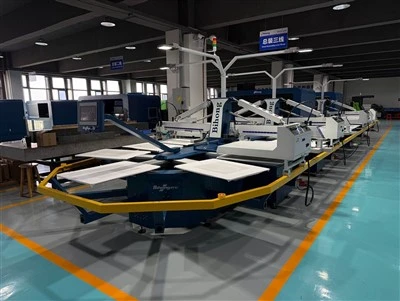
Let me cut to the chase – yes, they are. But you can’t just Google “green screen stretching machine” and pick the first result that pops up. A lot of manufacturers will slap a tiny “eco-friendly” sticker on a machine that’s still wasting energy, or uses cheap parts that break after a year, meaning you’ll end up tossing the whole thing and creating more waste. Over the years, I’ve tested dozens of models, talked to print shop owners who’ve burned through three machines in two years, and worked with engineers to build our own line of automatic stretchers, so I know exactly what makes one actually eco-friendly – and what’s just greenwashing.
First off, let’s get one thing straight: screen stretching, whether manual or automatic, has to be precise. If your screen isn’t stretched tight enough, your prints will have blurry lines, ink will bleed, and you’ll end up wasting a ton of screen mesh, ink, and time redoing orders. Automatic machines were made to fix the inconsistency of hand-stretching, right? But for a long time, most auto stretchers were overkill – they’d yank the mesh so hard it would snap halfway through, or cycle through heat settings that use more power than a home AC unit. That’s not eco-friendly, that’s just inefficient.
The biggest eco culprits in auto stretchers are two things: energy use and material waste. Let’s break that down. A standard auto stretcher uses a lot of electricity because it relies on constant, high-powered heating to set the mesh tension. Most of that heat gets lost, too – the heating elements are exposed, so half the warm air just drifts into the shop instead of going to the screen. Then there’s the tensioning system: old models use heavy metal frames and hydraulic parts that are hard to repair, so when a seal breaks or a tension gauge goes wonky, you have to replace the whole unit. And don’t even get me started on the mesh waste: cheap auto stretchers often overstretch mesh, so you have to cut off the excess and throw it away, instead of reusing or recycling it.
So what makes an automatic screen stretcher actually eco? Let’s start with energy efficiency. The best units I’ve seen use induction heating instead of those old coil elements. Induction heating is way more targeted – it only heats the area of the mesh that needs to be set, so you use 40-50% less energy, from what I’ve tested. And the heating elements are insulated, so almost no heat escapes into your shop. Our line of machines, for example, uses induction heating paired with a variable power setting – you can dial back the heat for smaller screens or thinner mesh, so you’re not wasting power on a job that doesn’t need full heat.
Next up, build quality. An eco-friendly machine isn’t just low energy – it’s a machine that lasts. I had a customer last year who bought a cheap auto stretcher from a big-box industrial site, and it broke 18 months in. They spent $1,200 on repairs, and then had to buy a new one, which meant tossing the old one – that’s a ton of metal and plastic going to landfill for no reason. The auto stretchers we sell are built with powder-coated aluminum frames (way lighter than steel, so less raw material used) and sealed, precision tensioning parts that are designed to be repaired, not replaced. We offer a 5-year warranty on all our machines, and most repairs can be done on-site in 15 minutes, no need to ship the whole unit back. That cuts down on waste from discarded parts, and saves our customers money in the long run.
Then there’s the mesh handling – this is a big one that most manufacturers sleep on. When you stretch a screen, the mesh has to be pulled evenly around the entire frame, right? Old auto stretchers pull from the corners first, which can warp the frame or overstretch the edges, so you end up trimming off 2-3 inches of mesh to get a usable screen. The best auto stretchers use a sequential tensioning system – they pull the mesh evenly from all sides, starting with the top and bottom, then left and right, so the tension is consistent across the whole screen. That means less waste: we’ve had customers cut their mesh usage by 25% once they switched to our machines, because they don’t have to throw away half the screen after stretching. And when that mesh does get old, we work with a local recycler that takes used polyester mesh and turns it into industrial fabric, so our customers don’t have to toss it in the trash.
Wait, but what about water usage? A lot of people forget that screen stretching also involves preparing the frame, right? You have to clean the frame, degrease it, and sometimes wash off old emulsion before stretching. Some auto stretchers are paired with wash stations that use high-pressure water, which wastes gallons per hour. Our machines integrate a low-flow spray system for frame preparation that uses 70% less water than standard wash stations, and we even offer a closed-loop option that recirculates the water, so you’re not wasting any at all. That’s a huge win for print shops that are trying to cut down on their utility costs and environmental footprint.
I know what some of you are thinking: “Wait, if a machine is eco-friendly, is it going to be more expensive?” Yeah, at first glance, the upfront cost is a bit higher than those cheap no-name models. But let’s do the math. Let’s say you’re a small print shop that runs 20 screens a day. A cheap auto stretcher might cost $800 upfront, but it uses $150 a month in electricity, breaks every two years, and wastes $100 a month in mesh. Over 5 years, that’s $800 + ($150 x 60) + ($400 x 2) + ($100 x 60) = $800 + $9,000 + $800 + $6,000 = $16,600. Our eco-friendly auto stretcher costs $2,200 upfront, uses $60 a month in electricity, lasts 7 years, and cuts mesh waste by 25% so you save $1,800 a year on mesh. Over 5 years, that’s $2,200 + ($60 x 60) + ($1,800 x 5) = $2,200 + $3,600 + $9,000 = $14,800. That’s almost $2,000 cheaper, and you’re not tossing a broken machine every two years. Plus, you’re using less energy and less water, which is good for your local environment too.
I also want to talk about something that’s not talked about enough: end-of-life sustainability. A lot of industrial machines are made with mixed metals and hard plastic that can’t be recycled, so when they reach the end of their life, they just end up in a landfill. Our auto stretchers are made with 90% recyclable materials – the aluminum frame can be melted down and reused, the tensioning parts are mostly stainless steel, and even the wiring is made from copper that’s easily recyclable. When a customer is done with one of our machines, we offer a take-back program: we’ll pick up the old unit, recycle all the usable parts, and give the customer a discount on a new machine. That means no more old machines rotting in a back alley or a landfill.
Now, I’m not saying every automatic screen stretching machine is eco-friendly. There are still a ton of manufacturers out there selling units that are just as inefficient as the manual ones, or they cut corners on parts to make them cheaper, which means you’ll be replacing them more often. That’s greenwashing, plain and simple. If a manufacturer tells you their auto stretcher is eco-friendly, ask them for specifics: how much power does it use per hour? Is the tensioning system sequential? Can parts be repaired instead of replaced? Do they offer a take-back or recycling program? If they can’t answer those questions, keep looking.
I’ve seen a lot of print shops struggle with this lately – everyone wants to be more sustainable, but they don’t want to sacrifice quality or spend a ton of money. The good news is that automatic screen stretching machines that are actually eco-friendly exist, and they’re not just for big Fortune 500 companies. I’ve helped everything from one-person home-based print shops to mid-sized apparel brands switch over, and they all say the same thing: they’re saving money on utilities and supplies, their prints are more consistent, and they feel good about not wasting as much.
At the end of the day, screen printing is all about creating something that lasts – whether it’s a t-shirt, a poster, or a custom sign. The last thing we should be doing is wasting resources to make that thing. An eco-friendly automatic screen stretching machine isn’t just a trend; it’s a smart investment that helps your business, your bottom line, and the planet.
If you’re curious to learn more, or you want to talk about which machine would work best for your shop, feel free to reach out. We can walk you through the specs, answer any questions you have about energy use, mesh savings, or anything else, and even send over a case study from a shop similar to yours that’s already making the switch. Don’t just take my word for it – test it for yourself.
Automatic Screen Stretching Machine References
- Sustainable Textile Printing: Reducing Environmental Impact Through Efficient Equipment, Textile Institute, 2021
- Energy Efficiency in Small Manufacturing Equipment, U.S. Department of Energy, Office of Energy Efficiency & Renewable Energy, 2022
- Mesh Waste Reduction in Screen Printing Operations, Screen Printing Industry Association, 2023
- Life Cycle Assessment of Industrial Textile Machinery, Journal of Cleaner Production, Vol. 312, 2023
Guangdong Aces Machinery Co., Ltd.
Guangdong Aces Machinery Co., Ltd. is one of the most professional automatic screen stretching machine manufacturers and suppliers in China. We are committed to providing high quality equipment made in China with low price. If you’re going to buy durable automatic screen stretching machine, welcome to get pricelist from our factory. Customized orders are welcome.
Address: 701, Building 5, Liandong U Valley, No.8 Zhixin 1st Road, Dagang Town, Nansha District, Guangzhou City, Guangdong Province, China.
E-mail: jessie@bhprinter.com
WebSite: https://www.bihongprinter.com/
