If you’ve ever stood in a telecom network operations center at 2 a.m., watching graphs spike and drop like a rollercoaster, trying to figure out why a residential neighborhood’s streaming service is glitchy while a nearby office’s video call runs smooth, chances are EPON OLT bandwidth shaping is the invisible hand keeping the chaos at bay. As someone who’s spent the last decade designing, testing, and refining EPON OLT systems for our team, I’ve lost count of how many times a customer—from a rural ISP struggling with limited backhaul to a dense urban broadband provider overloaded by apartment building use—has asked me, “What is this shaping thing, and why does it matter more than just throwing more bandwidth at the problem?” Let’s break this down like we would in a pre-deployment design workshop, no jargon bloat, just the real-world stuff that keeps networks stable and users happy. EPON OLT
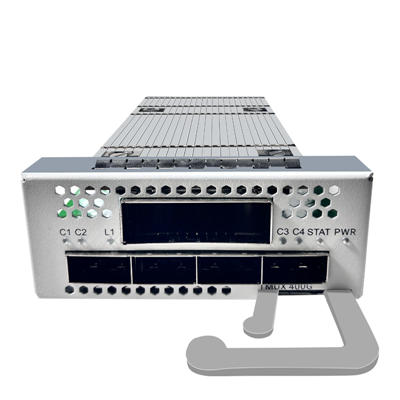
First, let’s ground this in what EPON actually is, because bandwidth shaping doesn’t exist in a vacuum. EPON stands for Ethernet Passive Optical Network, a point-to-multipoint fiber architecture that uses a single Optical Line Terminal (OLT)—that’s the box we build, sitting in a central office or data center—to connect up to 64 Optical Network Units (ONUs) across a shared fiber optic cable. Each ONU hangs off a customer side: one for a home, one for a small business, sometimes a whole apartment building for multi-dwelling units (MDUs). The critical detail here is that all these ONUs share the same upstream and downstream bandwidth from the OLT. Downstream is easier to visualize: the OLT sends data to every ONU in a continuous stream, each ONU grabs the packets meant for it, and that’s that. Upstream is the tricky part. Upstream data (your Netflix upload, your Zoom call, a smart meter sending energy use data) has to collide-free, so EPON uses a time-division multiplexing (TDM) system: the OLT assigns tiny, scheduled time slots to each ONU, like a lifeguard assigning each swimmer a lane to cross the pool. No two ONUs send at the same time, so no collisions, and each gets a slice of the total bandwidth pie.
But here’s the problem the moment you scale: that bandwidth isn’t a set of dedicated slices. If you leave it unmanaged, an ONU that’s supporting a 100-home MDU—where 20 people are streaming 4K on a Saturday night, 10 are gaming, and 5 are uploading family videos—will gobble up all its assigned time slots. That leaves the ONU at the adjacent single-family home, which only needs a couple of time slots for basic browsing, left waiting. Or worse, a misconfigured device on one ONU might start sending constant, unplanned data (think: a hacked camera spamming outbound traffic) that bleeds into neighboring ONUs’ slots. That’s where EPON OLT bandwidth shaping comes in. At its core, it’s a set of intelligent rules embedded in our OLT’s software that defines exactly how much bandwidth each ONU, and even each service on an ONU, can use over a given period—no more, no less. It’s not throttling, which is a blunt “cut off” when a limit is hit; it’s a dynamic, scheduled guardrail that allocates bandwidth fairly before congestion even happens.
Let’s get specific about how it works at the layer our engineering team designs every day. The IEEE 802.3ah standard, which defines EPON, outlines the framework for this shaping, and we’ve built our OLTs to extend that standard with granular, customer-specific controls. When we configure an EPON OLT for a customer, we don’t just set a single “max bandwidth” number for each ONU. We break it into three core shaping parameters that our field engineers walk through in every pre-deployment site survey: Committed Information Rate (CIR), Peak Information Rate (PIR), and Weight.
CIR is the minimum guaranteed bandwidth an ONU gets every time period—think of this as the “lifeline” bandwidth. For a small business, we might set a CIR of 10 Mbps upstream, so they always have enough bandwidth to process payments, send invoices, and run their POS system, no matter what other users are doing. For a residential home, CIR might be 1 Mbps upstream, enough to send a video call or a handful of photos, without being starved. This is non-negotiable; the OLT will always reserve that slice of bandwidth for the ONU, even if other ONUs are idle.
PIR is the maximum bandwidth an ONU can use, even during off-peak times. This is the guardrail I mentioned earlier. If a residential ONU has a PIR of 50 Mbps upstream, it can’t send more than 50 Mbps in any given second. No more 100 Mbps uploads that hijack the whole shared fiber, no more misconfigured smart devices spamming 100 Mbps of junk data. For high-demand users—like a freelancer who works from home and runs daily video uploads—we can bump their PIR to 100 Mbps during their working hours, then cap it back to 50 Mbps overnight, when they’re less likely to need it.
Weight is the relative priority we assign to each ONU when there’s extra bandwidth to allocate. Let’s say during a Saturday night prime time, all ONUs hit their CIR, and there’s still 200 Mbps of unused bandwidth left in the EPON segment. The OLT distributes that extra bandwidth proportionally based on each ONU’s weight, not equally. So a small business with a weight of 8 gets twice as much extra bandwidth as a home with a weight of 4. This is where shaping gets flexible, instead of being a one-size-fits-all blunt tool. For a municipal network, we’ll assign higher weights to fire and police department ONUs, so they always get priority over residential users during events. For a retail park with five stores, each store’s ONU gets a weight of 10, so they all get equal access to leftover bandwidth for restocking logs or weekly system backups.
The biggest myth I hear about bandwidth shaping is that it only exists to cap users’ speed. That couldn’t be further from the truth, especially for EPON networks, which rely on precise time slot allocation to avoid collisions. Without shaping, the TDM scheduling the OLT uses to prevent upstream collisions would be thrown off. If an ONU sends more data than it’s scheduled for, it overflows into another ONU’s time slot, causing a tiny collision that forces both to retransmit data—wasting bandwidth, increasing latency, and making every user’s connection feel sluggish. Shaping prevents that overflow, so the TDM system works exactly as designed, keeping latency low for everyone. That’s a critical point for our customers: shaping isn’t about limiting what users can do; it’s about ensuring every user gets the reliable, low-latency connection they pay for, without letting one user’s heavy usage ruin the network for everyone else.
Let’s talk about real-world use cases to make this tangible, because theory only goes so far. Last year, we worked with a mid-sized ISP in the Pacific Northwest that was struggling with a new MDU they’d just deployed. The building had 48 units, all connected to a single EPON segment, and their initial OLT configuration had no shaping—they just set a total bandwidth limit of 1 Gbps upstream. Within a month, they were getting 20 support tickets a day from residents complaining that their video calls dropped when Netflix started streaming. When our field team got onsite, we ran a quick traffic analysis and found that 12 of the units had three or more users streaming 4K Netflix at the same time, pushing the ONUs to send 80 Mbps each upstream, when their CIR and PIR should have been capped at 5 Mbps CIR and 20 Mbps PIR. The total upstream usage was hitting 900 Mbps, way over the 1 Gbps limit, but it was spread unevenly: three units were hogging half the bandwidth, while the other 45 units were getting less than 1 Mbps each. We configured the OLT’s bandwidth shaping to set 5 Mbps CIR, 20 Mbps PIR, and a weight of 3 for each residential ONU, plus a higher weight for the building’s shared Wi-Fi ONU. Within 48 hours, support tickets dropped to two a day, all related to temporary outages that were unrelated to bandwidth congestion, and the ISP told us their customer satisfaction score for that building jumped 22 points in a month.
Another example: a rural ISP in Iowa that serves 12 small towns, each connected via a single EPON OLT. Backhaul bandwidth was limited—each OLT only had 100 Mbps of upstream backhaul to the core network. Without shaping, during harvest season, the local farm co-ops would upload terabytes of crop data, weather data, and field logs overnight, using up all the backhaul bandwidth and leaving residential users with no internet. We configured each co-op’s ONU with a CIR of 20 Mbps, PIR of 50 Mbps, and a schedule that limited their heavy uploads to 10 p.m. to 6 a.m. Residential ONUs got a CIR of 1 Mbps, PIR of 10 Mbps, and higher priority during daytime hours. The farm co-ops still had enough bandwidth to upload their crop data overnight, and residents had consistent, reliable internet during the day. That’s the sweet spot of EPON OLT bandwidth shaping: it balances competing needs, even when backhaul is tight and demand is variable.
Now, let’s talk about what to look for in a well-designed EPON OLT bandwidth shaping system, because not all shaping tools are created equal. We’ve seen competitor OLTs with basic shaping that only lets you set a single maximum bandwidth per ONU, no CIR, no weight, no scheduling. That’s not real shaping—that’s a cap. A good shaping system, like the one we build, should have four key features: granular per-service control, time-based scheduling, real-time visibility, and compliance with industry standards.
Granular per-service control means you can shape bandwidth not just per ONU, but per service on an ONU. For a business ONU, you might have three services: VoIP, internet, and a point-of-sale system. You can set a CIR of 5 Mbps for VoIP (since it’s latency-sensitive), 10 Mbps CIR for the POS system (since downtime costs money), and 5 Mbps CIR for internet, so each service gets the bandwidth it needs, no matter what other services on the same ONU are doing. That’s a level of control that basic shaping tools can’t deliver.
Time-based scheduling is another non-negotiable feature. Traffic patterns change throughout the day: businesses are busy during 9 a.m. to 5 p.m., residential users are busy during 7 p.m. to 11 p.m., farm co-ops upload data overnight. A good shaping system lets you set rules that change CIR, PIR, and weight based on time of day, day of the week, or even event. For example, during a local high school’s basketball games on Friday nights, you can bump student ONUs’ PIR from 20 Mbps to 50 Mbps, and bump the local library’s weight to ensure students doing homework get priority.
Real-time visibility is critical for network operators. Our OLT’s shaping dashboard shows live traffic per ONU, per service, and per time slot, so you can see exactly where congestion is happening, adjust shaping rules on the fly, and prove to customers that they’re getting the bandwidth they pay for. We had a customer last quarter who got a complaint from a business that claimed their internet was only running at 2 Mbps, when they paid for 10 Mbps. We pulled up the shaping dashboard and showed them that during the time they claimed to have slow service, their ONU was hitting its CIR of 5 Mbps, but the extra bandwidth was allocated to two nearby school ONUs with higher weights. We adjusted the weight assignment to give the business higher priority during work hours, and the complaint was resolved in 20 minutes, no downtime required.
Finally, the shaping system has to comply with IEEE 802.3ah and 802.3av standards, which define EPON and 10G EPON respectively. That ensures that the shaping rules work seamlessly with any ONU from any vendor, no compatibility issues. We’ve tested our shaping systems with ONUs from 12 different manufacturers, and they all work flawlessly, because we built the shaping engine to align with the standard’s TDM scheduling rules.
I’d be remiss if I didn’t mention a common mistake we see operators make when deploying EPON OLT bandwidth shaping: over-provisioning. It’s tempting to set high CIR and PIR for every ONU, “just in case,” but that defeats the purpose of shaping. If you set a CIR of 50 Mbps for every ONU on a 1 Gbps EPON segment, you’re guaranteeing 64 * 50 = 3200 Mbps of bandwidth, which is more than the total shared bandwidth of 1 Gbps. That means at least 32 of the ONUs will never get their full CIR, leading to complaints about slow service. Shaping is about balancing guarantees and flexibility, not over-promising. Our field engineers always do a baseline traffic analysis of the network before configuring shaping, using real usage data from the first 30 days of deployment, to set CIR, PIR, and weight based on actual needs, not hypothetical maximums.
If you’re a telecom network operator, ISP, or municipal broadband provider, chances are you’re dealing with growing demand: more 4K streaming, more remote work, more smart devices, more IoT sensors. Shared fiber networks like EPON are the most cost-effective way to deliver that demand, but without proper bandwidth shaping, they’ll turn into a bottleneck of slow speeds and frustrated customers. EPON OLT bandwidth shaping isn’t an extra feature—it’s the core of a reliable, scalable EPON network. It turns a shared fiber into a network that delivers consistent, predictable service for every user, from a home browsing the web to a small business processing credit cards.

We’ve spent years refining our OLT’s shaping engine, working alongside operators to solve real pain points, testing it in rural towns and dense urban MDUs. If you’re looking to upgrade your EPON network’s performance, troubleshoot congestion, or design a new broadband network that grows with your users, we’re here to help. We work with teams across the globe, from small ISPs to large regional providers, to tailor bandwidth shaping rules to your specific needs, no one-size-fits-all solutions. Reach out to our team for a consultation, and let’s talk about how our EPON OLT’s bandwidth shaping capabilities can help you deliver the reliable, high-speed service your customers deserve.
100G To 3.2T DCI Product Suite References
IEEE Std 802.3ah-2004, IEEE Standard for Ethernet – Amendment 5: Media Access Control Parameters, Physical Layers, and Management Parameters for Subscriber Access Networks
ITU-T G.984.3, Gigabit-capable Passive Optical Networks (GPON): Transmission Convergence Layer Specification
Broadband Forum TR-144, Ethernet Passive Optical Network (EPON) Operational Requirements
Shenzhen FB-LINK Technology Co., Ltd.
Shenzhen FB-LINK Technology Co., Ltd. is one of the leading epon olt manufacturers and suppliers in China. We warmly welcome you to wholesale or buy discount epon olt in stock here from our factory. All customized products are with high quality and competitive price. Contact us for quotation and free sample.
Address: Building B, Yuanchuang Park, No. 4, Henglang Community, Dalang Street, Longhua District, Shenzhen
E-mail: Flash@fb-link8.com
WebSite: https://www.100gmodules.com/
