If you’ve ever walked past a busy warehouse, a construction loading dock, or a retail distribution center, you’ve seen forklifts humming around—sliding pallets of building materials, stacking consumer goods high on shelves, and keeping entire supply chains moving. For years, I’ve worked as a forklift supplier, and the most common question I get from new warehouse managers or small business owners isn’t about how much weight a forklift can lift, or how fast it moves. It’s always about safety. Because a forklift isn’t just a piece of heavy equipment—it’s a tool that can cause serious, even fatal, accidents if it’s not designed, operated, and maintained with safety at the forefront. Forklift

I didn’t always get this. Early in my 18 years in this business, I got a call from a small distribution manager named Jim. He’d just had a near-miss: a new operator, still learning the ropes, had tipped a narrow-aisle forklift while turning a corner, sending a pallet of fragile electronics crashing into a rack. No one was hurt, but Jim was shaken. “I thought all forklifts were the same,” he told me. “I didn’t realize the little differences in safety features could mean the difference between a minor scare and a disaster.” That call stuck with me, because it’s exactly right. Not all safety features are equal, and not all forklifts need the same suite of features. The best ones are tailored to the work environment, the operator, and the specific hazards a site faces. Let’s break down the core safety features we build into every forklift we sell, and why they matter.
First, and most basic, is stability. Forklift tips account for nearly a quarter of all forklift-related accidents, according to data from the Occupational Safety and Health Administration (OSHA). A forklift’s center of gravity is a key factor here—especially when it’s lifting a heavy load. That’s why our forklifts have a low-mounted, wide-base chassis, designed to keep the center of gravity as close to the ground as possible. The mast, the vertical assembly that lifts and lowers loads, isn’t just for lifting: it’s engineered to retract forward slightly when moving, so the load stays close to the chassis, further balancing the machine. For narrow-aisle warehouses, where space is tight, we add electronic stability controls that use sensors to monitor tilt angle, speed, and load weight in real time. If the system detects the forklift is approaching a dangerous tilt threshold—say, taking a turn too fast or lifting a load unevenly—it automatically cuts throttle power and applies gentle braking before the operator even notices a risk. I’ve seen this feature save dozens of operators from tipping over, and it’s become non-negotiable on every forklift we sell for indoor, high-density environments.
Next, visibility. Operators can’t avoid hazards they can’t see, so we design our forklifts to eliminate blind spots wherever possible. Traditional forklifts have a thick overhead guard and mast that can block the view of loads or people near the front wheels, so we use slimmer, reinforced mast profiles and tinted, impact-resistant glass for the operator cabin. For our electric forklifts, which are the most common for indoor use, we add bright, adjustable LED work lights—both for nighttime shifts and for lighting up the area around the front wheels, where small team members or pallets might be hidden. We also install backup alarms, but we don’t stop there: many of our customers miss the quiet alert that comes with a lot of older forklifts. Instead, we offer optional proximity sensors that beep faster when the forklift is near a wall, a rack, or a person, and some of our newer models have 360-degree camera systems that display a live feed on the operator’s screen. A few years ago, a food distribution client told us that adding the 360 camera cut their pedestrian-forklift near-misses by 70% in the first six months. That’s not just a feature—that’s a life-saver.
Operator protection is another layer of safety we prioritize. The operator is inside the cabin every shift, so their space needs to be as secure as possible. All our forklifts have reinforced rollover protection structures (ROPS) and falling object protection structures (FOPS), built to OSHA and ISO standards. ROPS are designed to keep the operator upright if the forklift tips, and FOPS prevent heavy loads or debris from crashing into the cabin if something falls from a high shelf. We also adjust the cabin ergonomics to reduce operator fatigue—fatigue is a major risk factor for accidents. Our seats are adjustable, with lumbar support and suspension that dampens the jolt from uneven warehouse floors, and the controls are arranged so operators don’t have to stretch or twist awkwardly. We install brake systems that are responsive but not overly sensitive, so new operators don’t jerk the truck to a stop when they’re learning. For our larger, outdoor forklifts used on construction sites, we add seat belts with automatic locking retractors—something many older forklifts don’t have, but OSHA requires for all operators in high-risk environments.
One feature that’s often overlooked is load management. A forklift is only as safe as the load it’s carrying, so we build systems that help operators correctly lift, secure, and monitor loads. Every forklift we sell has a built-in load weight indicator that displays the exact weight being lifted on the cabin screen, and a load chart that’s programmed into the forklift’s computer. If an operator tries to lift a load heavier than the forklift’s rated capacity, the system sends an audible and visual alert, and in some cases will even prevent the mast from extending further. We also design forks with non-slip surfaces, so pallets don’t slide off while moving, and optional fork positioners that let operators adjust the distance between the forks without leaving the cabin—no more leaning out to reposition forks, which is a common cause of falls or collisions. Last year, I worked with a logistics company that had been using forklifts without load weight indicators; they’d had three near-misses where overloaded forklifts almost tipped. After we equipped their 20 trucks with our load management system, that problem went away entirely.
We can’t talk about forklift safety without mentioning ergonomics and operator training, because even the best-designed feature won’t help if an operator doesn’t know how to use it. That’s why as a supplier, we don’t just sell trucks—we offer free safety training sessions for every customer, on top of the manuals and online resources we provide. I’ve spent hours in training rooms, watching new operators struggle to navigate narrow aisles, and helping them understand how the safety features on their forklift work. For example, many operators don’t know that the stability control system only works at certain speeds—if you go too fast around a turn, the system can’t compensate, so it’s still important to drive at a safe speed. We also work closely with our customers to customize safety features for their specific site: a cold storage warehouse, where temperatures can drop to -20°F, needs forklifts with heated cabins and batteries that perform better in cold, so we add those modifications. A construction site needs forklifts with rugged tires and ROPS that can handle uneven dirt ground, so we build those in. No two workplaces are the same, and one-size-fits-all safety features rarely work as well as tailored ones.
Over the years, we’ve also seen advancements in technology that take forklift safety even further. Telematics systems, for example, let us track a forklift’s location, usage, speed, and even operator behavior remotely. If a customer has a forklift that’s frequently speeding or lifting loads unevenly, we can flag that and work with them to retrain operators. Some of our newer models have pedestrian detection systems that automatically slow the forklift or stop it if a person is within a certain distance, even if the operator doesn’t see them. We’ve also worked on reducing the environmental impact of our forklifts, because many safety risks (like poor air quality) come from old, gas-powered forklifts. Our electric forklifts produce zero emissions, which not only is better for the environment but also improves air quality in enclosed warehouses, reducing operator fatigue and respiratory issues.
I’ve seen the cost of cutting corners on forklift safety, and it’s never worth it. A forklift accident doesn’t just mean medical bills or equipment repairs—it means a worker loses a day, a week, or even their ability to work. It means a business faces OSHA fines, lost productivity, and damaged reputation. That’s why every safety feature we build into our forklifts isn’t just an add-on—it’s something we test in our own warehouse, and refine based on feedback from operators, managers, and safety experts.
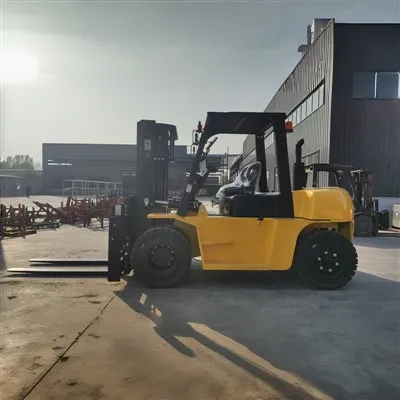
If you’re shopping for a forklift, don’t just look at price or lift capacity. Ask about the stability controls, visibility features, operator protection systems, load management tools, and training support that comes with the truck. At the end of the day, the best forklift for your business is the one that keeps your team safe, your operations running smoothly, and your peace of mind intact. If you’re ready to learn more about how our forklifts can fit your site’s needs, we’re here to help. Reach out to our team to discuss your requirements, ask questions about safety features, and start finding the right solution for your business.
Lawn Mower References
- Occupational Safety and Health Administration. (2023). Forklift Safety Standards. U.S. Department of Labor.
- International Organization for Standardization. (2022). Safety of Industrial Trucks (ISO 3691 Series).
- Material Handling Industry Association. (2021). Forklift Accident Statistics and Prevention Report.
Jining Sunsail Machinery Co., Ltd.
With abundant experience, we are one of the most professional forklift manufacturers and suppliers in China. We warmly welcome you to buy high-grade forklift made in China here from our factory. For price consultation, contact us.
Address: Room 410, Digital Industry Building, Rencheng District, Jining City, Shandong Province,China
E-mail: Sunsail_machinery@163.com
WebSite: https://www.sunsailmachine.com/
