Hey there, if you’re here hunting for a reverse osmosis (RO) water system, you’re probably tired of funky tap water smells, odd tastes, or that random film on your glasses after washing them — trust me, I get it. I’ve been selling RO systems for almost a decade, and the number of questions I get from folks who either overbuy useless fancy features or underspend and end up with a lemon is wild. I’m gonna break down what you actually need to look for, no sales fluff, just real stuff I wish every first-time buyer knew. Reverse Osmosis Water System
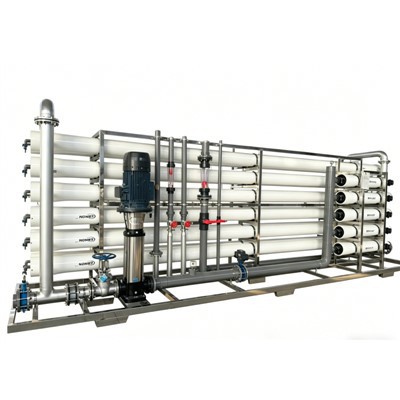
First off, let’s get one thing straight: not all RO systems are created equal. I’ve seen people drop $800 on a countertop unit that dies in 6 months, and others grab a $200 model that’s still going strong after 3 years. It all comes down to matching the system to your actual needs, not the ones the sales ad promises. The first big thing to check is how it handles your local water. Wait, how do you even get that info? Most cities post your water quality report online every year — just type in your county + “consumer confidence report” and you’ll get a full list of contaminants like lead, nitrates, or hard minerals. If you have well water, you can grab a cheap test kit from the hardware store for like $20. That number will tell you if you need a system with extra filters beyond the standard RO membrane. For example, if your water has a lot of sediment (like from a well with dirt runoff), you’re gonna want a pre-filter that can handle that before it clogs up your main membrane. No pre-filter = membrane dies way faster, and those aren’t cheap to replace.
Next up: the membrane. This is the heart of the whole thing, right? The RO membrane does the actual filtering, pulling 95-99% of contaminants out. Not all membranes are the same, though. You’ll see terms like TFC (thin-film composite) — that’s the standard good stuff, but look for a membrane with a decent lifespan. A lot of cheap systems have membranes that only last 1 year, while mid-range ones go 2-3, and some high-end can hit 5. Wait, but don’t get tricked into paying for a 5-year membrane if your pre-filter is garbage, because even the best membrane will get clogged early if there’s no pre-filtering. I always tell people: pre-filters are your membrane’s bodyguard, so skimp on them = shorten your system’s life.
Then there’s the flow rate. This is a big one people sleep on. Flow rate is how much water comes out of the faucet per minute, and it’s measured in gallons per day (GPD). If it says 50 GPD, that’s the total amount it can filter in a full day, not how fast the water comes out when you turn the tap. For a single person or a small apartment, 50 GPD is fine — you’ll only need a couple gallons a day for drinking and cooking. But if you have a family of 4, or you like to fill big water pitchers, or you use water for things like watering plants (wait, no, RO water for plants isn’t great, but whatever), you want something higher, like 75 or 100 GPD. I had a customer last year who bought a 50 GPD system for his family of 5, and he complained it took forever to fill his coffee pot and the dog’s water bowl. Had to swap it for a 75 GPD, and he texted me a week later saying he was kicking himself for not checking the flow rate first. Don’t be that guy.
Filter replacement is another huge, overlooked factor. All RO systems have multiple filters — usually a sediment pre-filter, a carbon pre-filter, the RO membrane, and sometimes a post-carbon filter that fixes the taste. But how easy are those filters to swap? Some systems make you call a technician every time, which costs $50-$100 a pop. That’s a racket, if you ask me. The good systems let you swap the filters yourself in 5 minutes with no tools. And how often do you need to swap them? Cheap filters might need changing every 3 months, while better ones go 6-12 months. Calculate that cost over the year — if a $300 system has $100 a year in filter changes, that’s way different than a $500 system with $20 a year in changes. I always give customers a quick math sheet when they’re comparing, because people don’t think about ongoing costs, just the upfront price.
Wait, what about waste water? RO systems do waste water — it’s part of the process, flushing out all the contaminants that get stuck in the membrane. A lot of people freak out about this, and yeah, old RO systems used to waste like 3 or 4 gallons for every 1 gallon of clean water. But newer, better systems have improved that ratio to 2:1, or even 1:1 for some models. If you live in an area with super high water bills, that’s a big deal. I had a customer in California last year who was on a metered plan, and he almost passed on a RO system because he thought the waste would double his water bill. Once I pointed out the low-waste model, he went for it, and his bill only went up like $12 a month — way less than he was spending on bottled water. Also, some people try to plumb that waste water to their toilet or laundry, which is possible, but check your local codes first, and make sure you’re not doing something that could damage your pipes. I don’t usually recommend that unless you’re handy, because it can get messy if you mess up the plumbing.
Another thing to consider: installation. Are you handy enough to install it yourself, or do you need a pro? Countertop RO systems are super easy — you just set them next to your sink, hook up the water line with the fittings they give you, done. Undersink systems are a little trickier, but most come with detailed instructions and tools, so if you’ve ever hung a shelf or assembled IKEA furniture, you can do it. But if you hate DIY, budget for installation costs, which can be $100-$200 depending on where you live. Also, check if the system comes with a warranty. A lot of cheap systems have only a 1-year warranty, which covers the parts but not labor. Better systems have 2-5 year warranties on the membrane, and some even include labor if something goes wrong. That peace of mind is worth paying a little extra for, trust me.
Wait, let’s talk about extra features that are actually worth it, vs. the hype. Things like LED indicators that tell you when to change filters — that’s a good one. No more guessing if your filter is clogged or if the water is just tasting off. Digital displays that show TDS (total dissolved solids) — that’s cool, because you can see how well the RO is working, but it’s not necessary for most people. I have a TDS meter on my truck, and I use it to test systems for customers, but 90% of the people I sell to don’t care about the numbers, they just care that the water tastes better. On the flip side, some systems have ultraviolet (UV) lights to kill bacteria — that’s only necessary if you have well water or your local water quality report mentions bacteria or other microbes. If you’re on city water, that’s probably overkill, and will just add to your filter costs. I always tell customers: if the city says your water is safe to drink, you don’t need UV. If you have your own well, definitely look into it.
Oh, and don’t sleep on brand reputation. I know, I know, everyone says their brand is the best, but I’ve tested a ton of different brands over the years. Some of the no-name ones on Amazon have great prices, but their customer support is non-existent — if a filter breaks or a part is missing, you’re screwed. The established brands I work with have local support, so if you have a question at 8pm, you can call someone and get help, not wait 3 days for an email reply. Also, check reviews, but take Amazon reviews with a grain of salt. A lot of those are fake. Look for reviews on Google or Yelp, where real people post actual experiences. I once had a customer tell me he bought a system from a big box store, and the membrane died after 6 months, and the store wouldn’t help because it was “installation error” even though he followed the instructions. That’s the kind of hassle you want to avoid.
Wait, what about bottled water? I get it, some people just go to the store and buy cases, but let’s be real — that’s expensive and bad for the environment. A 5-gallon jug of water at the store is like $0.75, but an RO system with the same 5 gallons will cost like $0.05 or less, and you don’t have to carry heavy jugs to your car. Plus, most RO systems produce way less plastic waste than buying bottled water. I always point that out to customers who are on the fence, because the savings add up fast. Even if you only drink 2 gallons a day, that’s $520 a year on bottled water, vs. $50 a year on RO filters. That’s a no-brainer, right?
Wait, hold on, let’s make sure I didn’t miss anything. Oh, right: water pressure. If your home has low water pressure, some RO systems can make that worse. Because RO systems need a certain amount of pressure to work properly — usually 40 psi or higher. If your pressure is lower than that, you might need an additional pressure booster pump, which is like $50-$100. That’s another thing to check before you buy. You can get a pressure gauge at the hardware store for a few bucks to test your water pressure, no need to call a plumber for that. I had a customer last month who had really low water pressure, and he got a RO system without a booster, and he came back complaining that his shower felt even weaker. Swapped in the booster, and he was happy again. Easy fix, but only if you check pressure first.
Also, think about where you’re gonna put it. Undersink systems need space under your sink, so measure the gap before you buy. A lot of people buy a big undersink RO system and then realize it won’t fit next to their pipes. Countertop systems are bigger, but you can set them anywhere, so that’s good for small apartments or renters who can’t drill holes under the sink. Portable countertop systems are also great for people who move a lot — you can just pack it up when you move.
Wait, let’s wrap this up with what NOT to do. Don’t buy the cheapest one on Amazon just because it’s cheap. Don’t ignore your water quality report — that’s the most important base info. Don’t forget to calculate filter replacement costs, because that’s where the hidden fees are. Don’t skip checking your water pressure. And don’t fall for fancy features you don’t need. The best RO system for you is the one that matches your local water, your budget, your space, and your DIY skills.
At the end of the day, an RO system is a long-term investment — it’s not a one-time purchase. I’ve seen customers who bought a $200 system and ended up spending $600 in repairs and extra filters in a year, vs. a customer who paid $500 for a good system and only spent $30 on filters that year. It’s all about balancing upfront cost with long-term value. If you take the time to check all these boxes, you won’t end up with a dud.
If you’re still not sure which system is right for your home, feel free to reach out to chat through your specific needs. I can walk you through what works for your local water, your space, and your budget — no pressure, no sales pitches, just real advice from someone who’s been doing this for years and wants you to get a system that actually works for you. Let’s connect and find the perfect fit for your home.
Deionized Water System References:
- EPA. (2023). Reverse Osmosis Water Treatment. U.S. Environmental Protection Agency.
- World Health Organization. (2022). Guidelines for Drinking-Water Quality, 4th ed.
- Water Quality Association. (2021). Reverse Osmosis System Selection Guide.
Shandong Yanuo Environmental Protection Equipment Co., Ltd.
We’re well-known as one of the leading reverse osmosis water system manufacturers and suppliers in China, featured by quality products and good price. Please rest assured to buy bulk reverse osmosis water system made in China here from our factory. Customized orders are welcome.
Address: North Side of the Road, 1,000 Meters West of the Intersection of Fenghuangshan West Road and Provincial Highway S102, Wangfu Subdistrict, Qingzhou City, Weifang City, Shandong Province.
E-mail: ynhb.499973983@gmail.com
WebSite: https://www.zkyaruo.com/
