If you’ve ever turned on your car’s AC only to be greeted by a rattling, grinding, or whirring noise from under the hood instead of crisp cold air, you know how frustrating that can be. As someone who’s been in the automotive compressor game for years—we supply compressors to shops and dealerships across the country—I’ve seen my fair share of people panicking over a noisy unit, thinking they need to drop thousands on a new one right away. The truth is, most compressor noises are diagnosable with a little basic know-how, and a lot aren’t a reason to replace the whole part immediately. Let’s break this down the way we do it at our shop floor, no jargon required, no confusing terms you can’t wrap your head around. Automotive Compressor
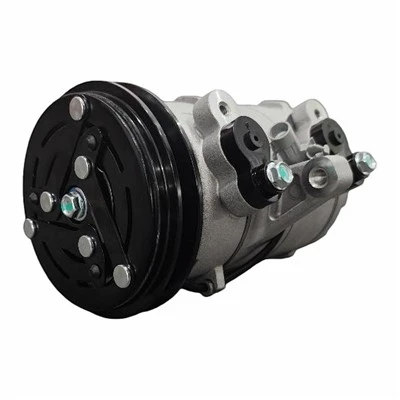
First off, let’s get one thing straight: not every noise coming from the compressor is the compressor’s fault. A lot of folks assume the second they hear a weird sound, the compressor is dead, but 3 out of 5 times, the noise is coming from somewhere else in the AC system or even the engine bay. So before you crawl under the hood with a flashlight, start with the basics. Wait until the AC is on, and listen closely—where is the noise coming from exactly? Is it a high-pitched squeal that gets louder when you rev the engine a little? That’s almost always a belt, not the compressor. The AC compressor has its own drive belt (or sometimes a clutch driven pulley), and if that belt is cracked, glazed, or even just loose, it’ll make that squeal. We see this all the time in older cars—people let their belts go too long, and before they know it, they’re calling about a “bad compressor” when all they need is a $20 belt. Another quick check for that squeal: spray a little water on the belt while the AC is running. If the noise goes away for a second, that’s definitely the belt, not the compressor. Easy fix, no compressor needed.
Next up, if the noise is a rattling sound that gets worse when the AC is set to max, let’s narrow that down. Pop the hood and locate the compressor—it’s usually a cylindrical part mounted low on the engine, with two lines running to it (the high and low pressure lines). Grab hold of the compressor’s clutch pulley and wiggle it back and forth a little. If there’s more than a tiny bit of play (like it moves more than a quarter inch), that’s a sign the internal bearings are starting to go bad, which would cause that rattling. But before you jump, check the compressor’s mounting bolts too. A lot of times, those bolts loosen over time from engine vibration, and the whole unit rattles around on its mount, which sounds exactly like internal bearing noise. Tightening those bolts back to spec (we use a torque wrench here, but even just a quarter turn if you’re not sure) will often fix the noise completely. That’s another free, quick fix that saves people from buying a new compressor unnecessarily.
Now, if the noise is a grinding or growling sound, that’s where we start to get closer to the compressor itself, but there are still a couple of other things to rule out first. One common culprit here is refrigerant issues. If your AC is low on refrigerant, the compressor has to work way harder than it’s designed to, and that can cause a grinding noise. How do you check that? Well, most cars have a sight glass on the AC’s high-pressure line—if you turn the AC on and see bubbles swirling in the sight glass, that means you’re low on refrigerant. Top that off, and the noise should go away. But wait a second: don’t just add refrigerant yourself if you’re not experienced. If the system is low, it means there’s a leak, and adding refrigerant without fixing the leak is just a temporary band-aid. But even still, the grinding from low refrigerant is external to the compressor’s internals, so it’s not the compressor being bad. We’ve had customers call us panicking because their compressor is making a grinding noise, only to find out they just need a top-up and a $10 leak sealant, not a whole new unit.
If you’ve ruled out belts, loose mounts, and low refrigerant, then the noise is almost certainly coming from the compressor’s internal parts. Let’s talk about the common internal noises and what they mean. The first one I see a lot is a clicking or chattering noise when you first turn on the AC. That’s usually the compressor’s clutch cycle—when the clutch engages to turn the compressor on, if it’s a little worn, it makes that clicking sound. Most of the time, that’s nothing to worry about, as long as it doesn’t turn into a louder noise after a minute or two of the AC running. But if that clicking turns into a grinding or a constant whir, that’s the compressor’s internal components: the piston rings, the bearings, or the valve plates. Those parts are what compress the refrigerant, and if they wear out, they cause that metallic grind.
Another noise that’s a red flag: a loud clunk that happens every time the clutch engages. That’s almost always a broken internal component, like a piston or a connecting rod, and that means the compressor is on its way out. If you hear that clunk, it’s not going to get better on its own—you’ll need to get it checked, either by a shop or by us if you’re looking for a replacement. But here’s a pro tip: if you’re in that situation, turn off the AC as soon as you hear that clunk. If you keep running a damaged compressor, the metal shavings from the broken parts will get into the AC lines and the condenser, and you’ll end up having to replace way more than just the compressor—you’ll have to flush the entire system, which costs a ton more. That’s a mistake I see people make all the time, and it’s avoidable if you act fast.
Wait, let’s not forget about the compressor’s clutch itself. A lot of people mix up clutch noise with compressor noise. The clutch is the part that connects the compressor to the drive belt, and it has an electromagnet that engages when you turn on the AC. If that electromagnet is going bad, you’ll hear a humming noise when the clutch is engaged, or even a squealing noise when it’s disengaging. That’s not a bad compressor—that’s a bad clutch, which is a separate part, and a lot of times you can replace just the clutch instead of the whole compressor. We supply clutch parts too, so that’s a great, cheaper option for most people. The way to check this: with the AC off, turn the key to the “on” position (don’t start the engine), and turn the AC to max. Listen for that humming noise near the compressor. If it stops when you turn the AC off, that’s the clutch, not the compressor. If it’s coming from deeper inside the compressor when the clutch is engaged, then it’s the compressor itself.
Now, let’s talk about something that’s a bit more niche but super common in our line: acid buildup in the AC system. If the old refrigerant in the system broke down over time, it creates acid that eats away at the compressor’s internal parts. That causes a grinding noise, and it’s a big one because it means the compressor is already damaged from inside. How do you spot that? If you had your AC serviced a few months ago and the noise started right after, there’s a good chance the old refrigerant wasn’t evacuated properly, leading to acid. That’s why we always recommend that when you service your AC, you make sure the old refrigerant is fully removed, and you add a lubricant that’s compatible with your compressor. Using the wrong lubricant is another big cause of noisy compressors—we’ve seen people use generic oil that doesn’t work, and the compressor seizes up or gets noisy within a month. So if you’re servicing your AC, stick to the lubricant that’s specified for your compressor, no shortcuts.
Once you’ve done all these checks, how do you know if you need a new compressor? Let’s sum it up: if you’ve ruled out all the external issues (belts, mounts, refrigerant, clutch) and the noise is coming from the compressor’s internal parts, then you’re probably looking at a replacement. But even then, it’s not always a full replacement. As I said earlier, sometimes just the clutch or the bearings are bad, so we always tell customers to get a diagnostic first before buying a new compressor. A lot of shops will charge you a diagnostic fee, but if you come to us, we can help you walk through the steps to confirm it’s the compressor before you spend money on a replacement.
Now, let’s talk about a few common mistakes people make when diagnosing a noisy compressor. First, don’t just replace the compressor without checking the rest of the system. We had a customer last year who replaced his compressor three times because each new one was only making noise after a month—turns out his AC system had a leak that was letting in moisture, which ruined each compressor. He fixed the leak, and the new one we supplied has been running great for over a year. Second, don’t ignore the noise. Even if it’s a small noise now, it could get worse quickly, and a damaged compressor can cause other parts to break, leading to more expensive repairs. Third, don’t try to work on the compressor if you’re not comfortable—AC systems have high pressure, and if you mess with it, you can get hurt. If you’re not sure about any of the checks, take it to a trusted shop, or reach out to us, and we can walk you through what to do.
Here’s the thing about being an automotive compressor supplier: we’ve been doing this for a long time, and we know that most people don’t know the difference between a belt noise and a compressor noise. That’s why we created these simple steps to help people figure out what’s going on without overspending. We don’t want to sell someone a compressor they don’t need—we want to sell them the right part, at the right price, when they actually need it. If you’ve gone through these steps and you’re pretty sure your compressor is the issue, or you just want to double-check with someone who knows their stuff, don’t hesitate to reach out to us. We’re here to help you get your AC back up and running without the hassle.
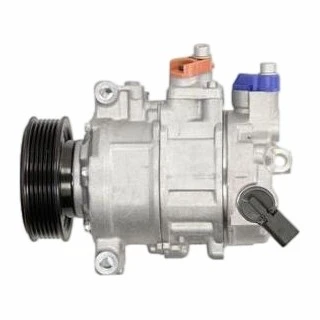
Now, let’s wrap this up with a quick recap to make sure you’ve got it all straight:
- Start with the easy stuff: check the belt (squeal that goes away with water = belt issue), tighten the compressor mounts (loose = rattling noise), check refrigerant (bubbles in sight glass = low, top up and fix leak).
- Rule out the clutch: humming noise when AC engages = clutch, not compressor.
- If all external checks are good, the noise is internal: clicking when starting is normal, grinding/clunking = likely compressor needs replacement.
- Don’t forget to flush the system if you have a bad compressor—metal shavings will ruin a new one.
Construction Compressor That’s the basics of diagnosing a noisy automotive compressor, straight from the people who supply the parts that keep your AC cool.
References
- Automotive Air Conditioning Technical Manual, Mobile Air Conditioning Society (MACS) Worldwide, 2022.
- “Compressor Noise Diagnosis and Troubleshooting”, Automotive Service Association (ASA), 2021.
- HVAC-R Fundamentals for Automotive Systems, Pearson Education, 2020.
Jiangsu Nuoyan New Energy Vehicle Air Conditioning Co., Ltd.
With abundant experience, we are one of the most professional automotive compressor manufacturers and suppliers in China. We warmly welcome you to buy customized automotive compressor at competitive price from our factory. Also, quotation is available.
Address: No. 7 Xingyuan Road, Huangqiao Economic Development Zone, Taixing City, Jiangsu
E-mail: nuyantech2026@163.com
WebSite: https://www.nuyantech.com/
