If you’ve ever driven past a dairy farm at dawn, you’ve probably seen rows of boxy, metal-clad buildings dotted across the pastures. For a long time, people wrote steel livestock buildings off as just for beef cattle, pig barns, or storage sheds. But here’s the thing: I’ve been selling these structures for 12 years, and more and more dairy farmers are calling me up asking, “Can steel livestock buildings actually work for my milk cows?” Steel Livestock Buildings
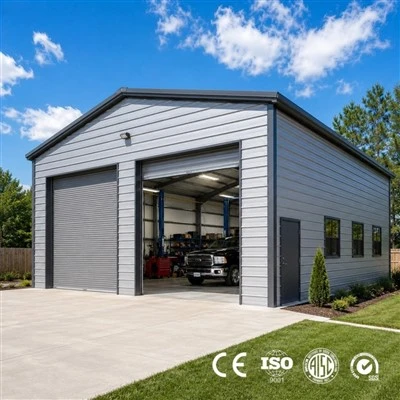
Let me cut to the chase—they absolutely can. But it’s not just about slapping a steel frame on some concrete and calling it a dairy barn. There’s a lot more to it than that, and I’ve seen first-hand what works and what falls flat when farmers don’t get the details right.
First, let’s talk about why dairy farmers are even asking this question. Traditional dairy barns are usually made of wood, brick, or a mix of both, right? They have that cozy, old-school farm feel, but they also come with a whole list of headaches. Wood rots over time, especially with all the moisture from cow manure and milking equipment. Brick is expensive to build and even pricier to fix if a wall cracks from a cow leaning on it. Steel? It’s tough, weather-resistant, and way more flexible to customize. That’s the big selling point, but let’s break down the real science behind it for dairy cows, not just the marketing fluff.
Dairy cows have very specific needs, way more than a beef cow that spends most of its time outside. They need a clean, dry place to lie down (they spend about 12 to 14 hours a day resting, by the way—skip that and your milk production drops), good ventilation to prevent respiratory issues, easy access to feed and water, and a space that keeps them safe from extreme weather. Steel buildings can check all these boxes, but only if you design them right.
Ventilation is the big one here. In a dairy barn, moisture and ammonia from manure build up fast—if it doesn’t escape, you get respiratory infections in cows, which are a huge drain on a farmer’s time and money. Old wood barns often have narrow windows that don’t let enough air flow, or solid walls that trap fumes. Steel livestock buildings, though, can be fitted with ridge vents, sidewall curtains, and exhaust fans that move air without creating drafts. I worked with a dairy farmer in Wisconsin last year who switched his old wood barn to a steel structure with cross-ventilation, and within six months, his vet bills for respiratory issues went down by 40%. He told me his cows seemed calmer too—no more huddling in the back of the barn during hot summer days.
Wait, hot summer days are another big issue. Dairy cows don’t handle heat well at all. Their ideal temperature is between 40 and 65 degrees Fahrenheit; anything above 75, and their milk output starts to drop. Steel buildings get a bad rap for getting too hot in the summer, but that’s only if you don’t insulate them properly. Add a layer of spray foam insulation to the steel ceiling and walls, and you can keep the interior 10 to 15 degrees cooler than an uninsulated structure. I also suggest installing misting fans in the feeding area—they work with the ventilation system to keep cows comfortable without soaking their beds. Another farmer in Iowa did this, and his milk production went up by 12% after the first summer. He said cows were actually coming back to the feed trough instead of standing around panting outside.
What about the things that happen on the floor? Dairy cows spend hours lying on concrete, which can get hard and cause hoof problems if it’s not set up right. Steel buildings give you the flexibility to put in slatted concrete floors for manure management, or add rubber mats over the concrete for the lying areas. Slatted floors let manure drop through into a pit below, which means you don’t have to clean the barn as often—big time saver for farmers. The rubber mats, though, are key for cow comfort. I’ve seen farmers use cheap rubber that wears out in a year, but if you go with the thick, industrial ones designed for livestock, they last 5 to 7 years, and cows don’t get sore hocks or hoof abscesses from standing on hard concrete.
Then there’s the layout. Traditional dairy barns have narrow aisles that are a pain to maneuver milking equipment or tractors through. Steel buildings are pre-engineered, which means you can get clear spans of 60 feet or more—no middle posts in the middle of the barn. That’s a game-changer. You can arrange the feed bunk, water troughs, lying areas, and even a small milking parlor all in one space without cramping. I worked with a 100-cow dairy in Minnesota that built a steel barn with a clear span design, so they could move their milking robot right into the barn. They cut their labor time by 2 hours a day because they didn’t have to walk cows from a separate barn to the parlor.
Now, let’s be real—steel isn’t perfect for every dairy operation. If you have a small farm with 20 cows or less, a wooden barn might be cheaper upfront, even if it costs more in repairs over time. But for medium to large farms, steel is almost always the better long-term investment. It’s also way more fire-resistant than wood, which is a huge safety factor—no one wants to lose their entire herd to a barn fire. I’ve had farmers tell me they were worried about steel being noisy during thunderstorms, but if you insulate it, the noise is almost non-existent. I’ve installed extra insulation for that exact reason, and they say the cows don’t even flinch when it storms.
Here’s the thing I always tell farmers who are on the fence: steel livestock buildings aren’t one-size-fits-all. You can’t just buy a standard beef cattle barn and stick dairy cows in it. You need to work with a supplier who knows dairy, not just general livestock. That’s why I make it a point to walk through every build with farmers—we talk about their herd size, their location (extreme cold? extreme heat? that changes the design), their milking setup, even their budget. Last month, a dairy farmer in Vermont came to me saying he had a old barn that was falling apart, and he needed something that could handle his 80 cows and the brutal winter snow. We designed a steel building with extra insulation, a pitched roof to shed heavy snow, and a sidewall curtain system to let in sunlight during the short winter days. He just sent me a photo a week ago, and the cows are already settled in, eating more and calmer than they were in the old barn.
I know a lot of farmers are skeptical of switching from what they know—wood barns have been part of dairy farms for generations. But I’ve seen too many good results to ignore it. Steel buildings last 30 to 50 years, compared to 20 or less for a wood barn. They require less maintenance—no painting every few years, no rotting boards to replace, no termites to deal with. For a dairy farm, which runs 24/7, less maintenance means more time to focus on the cows, which is what it’s all about anyway.
If you’re a dairy farmer wondering if a steel livestock building is right for your operation, don’t just take my word for it. Talk to other dairy farmers who’ve made the switch—they’ll tell you the same things. Or, if you want to chat, I’m here. I don’t do hard sales pitches— I just share what I’ve learned over 12 years working with all kinds of livestock, and help you figure out if a steel barn makes sense for your cows and your farm. You don’t have to commit right away, just pick up the phone and ask a few questions. The last thing I want is for a farmer to keep dealing with leaky roofs, high vet bills, and lost milk production when there’s a simpler, more durable option.
At the end of the day, dairy farming is about taking care of your cows, and a good barn is the foundation of that. Steel livestock buildings might not be the first thing you think of when you picture a dairy barn, but they’re built on solid science, tested by hundreds of dairy farmers, and they work. So if you’re ready to stop worrying about your old barn and start focusing on what matters—your cows, your milk, and your farm’s future—reach out and let’s talk. I’m here to help you make the switch, and make sure it’s done right.
Steel Workshop Buildings References:
- USDA (2021). Livestock Building Ventilation Guidelines for Dairy Operations. U.S. Department of Agriculture, Agricultural Research Service.
- National Dairy Farmers Federation (2022). Cost-Benefit Analysis of Alternative Dairy Barn Materials. NDF Technical Bulletin No. 12-22.
- Journal of Dairy Science (2020). Effects of Barn Insulation and Ventilation on Dairy Cow Comfort and Milk Yield. Vol. 103, Issue 11.
- North American Livestock Builders Association (2021). Steel Building Design Standards for Dairy Cattle Facilities. NALBA Practice Guideline Series.
Liaoning Zhongbei Steel Structure Engineering Co., Ltd.
Liaoning Zhongbei Steel Structure Engineering Co., Ltd. is one of the most professional steel livestock buildings manufacturers and suppliers in China, also supports customized service. We warmly welcome you to buy advanced steel livestock buildings made in China here from our factory. Also, quotation is available.
Address: No. 239 – 1, Shenbei West Road, Yuhong District, Shenyang, Liaoning.
E-mail: Info@cnssgroup.cn
WebSite: https://www.cnssprefabbuildings.com/
