If you’ve ever watched a wildfire move across the news—fast, unstopping, eating through trees and brush like it’s nothing—you might’ve wondered how firefighters actually get it under control. I’ve been in the fire hose game for 12 years, supplying gear to crews all over the West, and let me tell you, it’s not just about dragging a long tube of water around like a garden hose on steroids. Wildland firefighting is a totally different beast from structure fires, and the hoses we send out have to work way harder to keep up. Fire Hose
First off, let’s cut through the confusion: wildland fire hoses aren’t the same ones you use to put out a kitchen grease fire or spray down your house siding. Those are thicker, sturdier, built to handle high pressure from pumps that blast water through them at crazy speeds. Wildland hoses? They’re lighter, flexible, and designed to do two main things: either douse flames directly where they’re breaking out, or create a “wet line” to stop a fire from jumping into new territory. And trust me, when you’re working in 100-degree heat, hiking up a steep hillside at 6 a.m. with 50 pounds of gear on your back, that lightness matters more than you’d think.
Let’s start with the basics: how these hoses even get to the fire in the first place. A lot of people don’t realize that most wildfires start in remote areas—places where fire trucks can’t drive. So crews use packs called “fire hose packs,” which are basically compact, rollable hoses that fit over your shoulder. We supply these all the time; they’re usually 50 to 100 feet long, and when you unroll them, you hook them up to a portable pump (or sometimes a fire truck, if the road gets close enough) that sucks water from a nearby creek, pond, or even a hard-to-reach lake. No fire hydrations out in the middle of the woods, y’know? So that pump is non-negotiable, and the hose has to be able to handle whatever gunk is in that water—leaves, twigs, even tiny bugs—without clogging up. That’s why we build our wildland hoses with bigger internal openings than structure hoses; less chance of a clog when you’re rushing to cut off a fire’s escape route.
Once the hose is laid, what do crews actually do with it? There are two main uses here: direct attack and indirect attack. Direct attack is the obvious one—when flames are small enough to reach safely, you point the nozzle right at the fire, shoot water to smother it, and cool down the hot embers so they don’t re-ignite. But wildfires move way too fast for that half the time. That’s where indirect attack comes in, and that’s where hoses are absolute lifesavers. Indirect attack means creating a “fire line” by dousing a strip of land ahead of the fire with water. If the fire hits that wet strip, it can’t burn through—there’s no fuel left. We’ve had crews lay miles of our hoses to build these lines, sometimes working 12-hour days to get that wet strip in place before the fire jumps a canyon.
Wait, let’s talk nozzles for a sec, because they’re attached to those hoses and make all the difference. A lot of people think more water equals more fire power, but no—for wildland work, you need control. Our hoses work with nozzles that let crews adjust the flow: a fine mist for cooling down hot spots, a solid stream for reaching up into tree canopies, and a gentle spray for dousing dry grass without pushing embers around (which is how fires spread, by the way—wind picks up burning embers and drops them a mile away). I’ve seen new crews mess this up all the time, blasting huge amounts of water at a small flame and wasting it, when a quick, targeted spray would’ve done the job faster. That’s part of the training, sure, but the hose has to give enough pressure to make those nozzle adjustments work, even when the pump is back half a mile away.
Another thing that’s specific to wildland work: the hose has to hold up to rough terrain. We’re talking rocks, thorny bushes, steep slopes, and temperatures that swing from freezing at dawn to scorching by noon. Our hoses are made with a durable outer layer—usually a woven polyester or nylon blend—that resists abrasion so you don’t get a hole from dragging it over a sharp rock. And the inner lining? It’s a special material that doesn’t degrade fast when exposed to UV light, because sometimes a crew will lay a hose out for hours, even days, while they work their way up a hill, and you can’t have it springing a leak mid-operation. Last year, we sent a order to a crew in Northern California that’d been using a cheap, old hose that tore every time they turned a corner on a rocky trail. They switched to our stuff and said they only had one tiny leak the whole fire season, which is unheard of for remote work.
But wait—what about when a fire is really big, like a state-level wildfire? We’re not just talking hand-carried packs here. There are bigger “supply hoses” that connect fire trucks to portable pumps, or even to large tanks dropped by helicopters. These hoses are 3 to 5 inches in diameter, way thicker than the hand crews’ gear, and they can carry hundreds of gallons of water per minute. I remember a few years back, there was a fire in Oregon that had burned 100,000 acres in a week. The incident commander set up a base with 10 portable pumps, each hooked up to a 4-inch hose line that ran 2 miles to a river. That way, instead of hauling water in trucks or with helicopters, they could pump nonstop, 24/7. Those supply hoses are the unsung heroes of big wildfires—no one sees them on the news, but without them, crews would run out of water within hours.
A common misconception I hear all the time is that wildland firefighters just use water, but sometimes they use fire retardant too—wait, no, retardant is usually dropped by planes, but hoses are used for that too? No, mostly retardant is for aerial drops, but hoses can carry retardant if needed, though that’s less common. But what’s more common is that hoses are used for mop-up operations, which is the part no one talks about. Once the fire is “contained,” that doesn’t mean it’s out. Embers can hide in tree stumps, under leaves, in root systems, and they’ll burn for days, then reignite the whole fire. Mop-up is when crews go around every single hot spot, dousing it with water from hoses, checking with their hands to make sure the dirt is cool to the touch. We supply small, lightweight hose reels for mop-up crews too—easier to carry around after the main fire is gone, when you’re tired and just want to go home but you have to make sure the fire doesn’t come back.
Now, let’s get real about what goes into making a good wildland hose, because we’re in this business to supply gear that works when lives are on the line. First, flexibility. A hose that’s stiff as a board is useless when you’re trying to wrap it around a tree or drag it over a log. We test every batch of our hoses in our shop—we fold them over 1,000 times, leave them out in the sun for a week, drag them over gravel, and make sure they don’t crack or leak. Second, weight. Our standard wildland hose is 1 pound per 10 feet, compared to some old heavy hoses that were 3 pounds per 10 feet. For a crew member hiking 5 miles into a fire zone, that’s 10 pounds less to carry—huge difference when you’re already exhausted. Third, reliability. When a hose blows mid-attack, that’s not an inconvenience—that’s a setback that can let a fire jump a line and burn more homes. We back every hose we sell with a 5-year warranty, because we know how much is riding on it.
I’ve been to a few fire incidents over the years (safety training, mostly—we’re not firefighters, but we go to help our gear users), and one thing sticks with me: there’s a moment when a crew gets the hose laid, turns on the water, and points it at the flames, and the fire starts to go down. You can feel the relief, because that hose isn’t just a piece of rubber and fabric—it’s a tool that’s going to keep them safe, keep nearby homes safe, and keep the forest from burning any more than it has to.
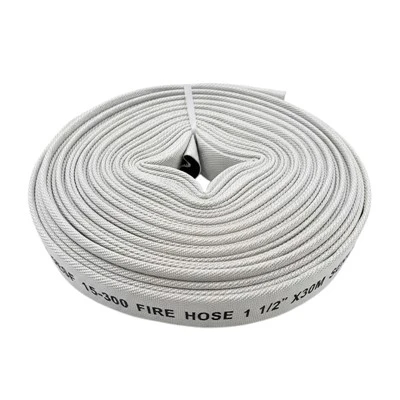
If you’re a firefighter, a fire department, or someone who needs reliable gear for wildland operations, we’ve got you covered. Whether you need hand packs, supply lines, nozzles, or whole systems, we build every piece to handle the worst conditions out there. Don’t waste your money on cheap hoses that tear or leak when you need them most. Get in touch with us to chat through your needs, figure out exactly what gear will work for your crew, and make sure you’re prepared for the next fire season. We’re here to help.
LED Emergency Light References:
- National Wildfire Coordinating Group. (2020). Wildland Fire Suppression Equipment Standards: Fire Hoses and Nozzles.
- U.S. Forest Service. (2019). Wildland Firefighting Methods: Direct and Indirect Attack Strategies.
- International Fire Service Training Association. (2021). Wildland Fire Hose Operations and Maintenance Manual.
Shaoxing Weimin Fire Fighting Equipment Co., Ltd.
Shaoxing Weimin Fire Fighting Equipment Co., Ltd. is one of the most professional fire hose manufacturers and suppliers in China, also supports customized service with low price. Welcome to buy discount fire hose in stock here and get quotation from our factory. 5 years warranty is available.
Address: CHINA
E-mail: info@weiminfire.com
WebSite: https://www.weiminfire.com/
