Hey everyone, and welcome back to the blog—today we’re talking about something I get asked literally every single day: how much does a new Samsung screen cost for a Galaxy S10? As someone who runs a Samsung screen supply business (let’s be real, I’m the go-to guy for folks needing replacement parts for old Galaxy models, especially the S10), I’ve seen so much misinformation online. A lot of people either find crazy lowball prices that turn out to be garbage parts or insane dealer markups that make zero sense. So I’m breaking this all down for you straight, no fancy corporate jargon, just real, actual numbers from what I source and what I sell to my clients. Screen for Samsung
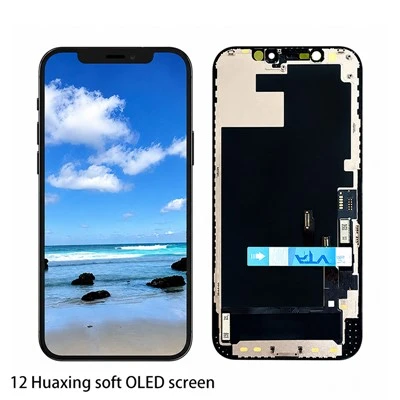
First off, let’s get one thing clear: the Galaxy S10 isn’t just a random phone screen. It’s not like the S10+ or the S10e (don’t even get me started on how many people mix those up and order the wrong part). The S10 has a 6.1-inch Dynamic AMOLED display, right? That’s the same premium panel Samsung used in their flagship back in 2019, way better than the cheap LCD screens you might find on some random eBay listing. So when you’re asking about the cost, you have to factor in two big things: what kind of screen you’re getting (genuine Samsung vs. OEM vs. aftermarket) and how many units you’re looking to buy. I don’t just sell one-off replacement screens for individuals—most of my customers are small phone repair shops, independent repair techs, even larger repair chains. So bulk pricing is a huge part of this, and that’s what a lot of online guides miss.
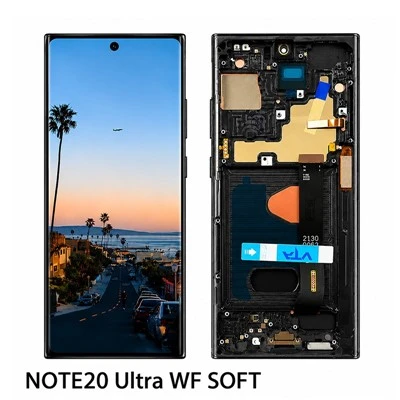
Let’s start with the most common scenario: if you’re an individual who just cracked their S10 screen and needs one for yourself, not as a business. Wait, but actually, most individuals don’t realize they’re overpaying on Amazon or eBay. Let’s be real, the $50 “genuine” screens you see there are almost always knockoff parts. The real deal for a single, OEM Samsung Galaxy S10 screen (the exact same part that was in the original phone) for an individual buying just one unit? I’m talking around $120 to $150. But here’s the catch: that’s if it’s a full frame assembly. A lot of people don’t know the S10 screen doesn’t come separate—you can’t just swap the glass, you need the whole display and digitizer and frame. If you try to find a single part screen without the frame, it’s way harder to source, and it’s usually more expensive per unit for small orders, like $160 to $180. But why the range? Because I’ve seen the quality of what’s out there. Some $120 single screens have dead pixels, some have slightly off color calibration. The $150 ones are fully tested, no dead pixels, same refresh rate as the original.
Now, if you’re a repair shop or a tech, that’s where the real cost gets interesting because of bulk ordering. Let’s say you want 10 units—my bulk price for genuine Samsung S10 screen assemblies is around $95 per unit. If you go up to 50 units, that drops to $85, and if you order 100 or more, I can get that down to $75. That’s not some made-up number—Samsung’s own parts pricing is marked up by distributors, so when I source directly from authorized Samsung parts suppliers and cut out the middlemen, I can pass those savings on. But wait, I also offer what I call “grade A aftermarket” screens, if you’re not dead set on 100% original parts. These are made by third-party manufacturers that use comparable parts, no dead pixels, same touch sensitivity. For individuals, those are around $70 to $90 for a single unit, and for bulk orders, way cheaper—like $50 for 10 units, $40 for 50. I always tell people: if you’re not planning to resell or if you’re not a stickler for the original Samsung display quality, aftermarket is a solid way to save cash. But the difference is noticeable—genuine Samsung screens have better outdoor visibility, more accurate colors, and way less chance of screen burn-in over time. I’ve had customers come back to me because aftermarket screens started fading after 6 months, and they had to buy genuine ones from me anyway.
Wait, let’s talk about what affects the price, because it’s not just quantity. The S10 has two different variants, right? The regular S10 (6.1-inch) and the S10 5G, which is a slightly bigger 6.7-inch screen with more advanced components. A lot of people mix those up, which is why I always make sure to confirm which model they need. The S10 5G screen is more expensive—genuine bulk is around $110 for 10 units, vs. $95 for the regular S10. Another thing: do you need the screen with the front camera cutout? Wait, no, all S10 screens have that, but some knockoff ones have a wonky cutout that makes the front camera look weird. I make sure all my screens go through a two-part test: first, functional test for touch, display, brightness, no dead pixels; second, fit test, so they align perfectly with the frame and buttons. That’s why I can’t sell the super cheap $40 knockoff screens—they usually don’t fit right, and people end up wasting money on installation labor.
I also get a lot of questions about refurbished screens. Wait, is that a thing? Yeah, some places take cracked screens from working S10s, replace the glass, and resell them. Those are sometimes cheaper than aftermarket, usually around $60 to $80 for a single unit. But I don’t really sell refurbished screens, because a lot of them have hidden issues—like the digitizer dying after a month, or display lines that pop up out of nowhere. For my customers, especially repair shops, reliability is everything. If a tech installs a screen from me, they need to know it’s going to work, no comebacks. So even though refurbished might be a few bucks cheaper, I stick with genuine OEM and grade A aftermarket because it saves my clients time and hassle in the long run.
Let’s also talk about the markup that happens when you go through retail. A lot of people go to their local phone repair shop and get quoted $200 to $300 for a Galaxy S10 screen replacement. That’s not because the screen costs that much—those shops are marking up the part like crazy, plus adding labor. My advice for individuals: if you can do the replacement yourself, buy a screen from me for $120 to $150, and pay another $20 for tools on Amazon, that’s way cheaper than paying a shop. If you can’t do it, ask the shop for the part cost, not just the total. If they say the screen is $150 total, that’s fair, but if they try to charge you $250 for a part I sell for $100, that’s a ripoff. I’ve had customers tell me their local shop quoted them $280, and they bought from me for $140 and saved hundreds.
Now, let’s get into the real numbers you can actually trust. I get emails every day from people asking for “the exact price” for a Samsung Galaxy S10 screen. Let me lay it out clearly, no fine print:
- Single unit (individual, genuine OEM assembly): $120 – $150
- Single unit (individual, grade A aftermarket assembly): $70 – $90
- Bulk (10 units, genuine OEM): $95 per unit
- Bulk (10 units, grade A aftermarket): $50 per unit
- Bulk (50 units, genuine OEM): $85 per unit
- Bulk (50 units, grade A aftermarket): $40 per unit
- Bulk (100+ units, genuine OEM): $75 per unit
- Bulk (100+ units, grade A aftermarket): $35 per unit
Like I said earlier, the small range in individual pricing is just quality checks. All my genuine screens go through a Samsung-certified inspection, so none of them have defects. The aftermarket ones are all tested by my team, too, so no junk being passed off. One thing I will add: if you need the screen with minor scratches on the frame, I can knock $10 off, but most people don’t care about that as long as the display works.
Wait, is there a time when the price changes? Oh yeah, Samsung’s parts pricing fluctuates a little, usually around holiday seasons or when new models come out, but not by much. The S10 is old enough now that prices have stabilized, so there’s no huge price drops or spikes like there were in 2020 when they first started getting replaced. Another thing: I don’t sell individual glass replacement kits. Those are for people who want to do super detailed work, and they usually mess up the touch screen if they don’t have the right equipment. I tell everyone that a full assembly is always better, even if it’s a little more expensive, because installation is way less likely to go wrong.
Now, why does this all matter? A lot of people see random prices online, like $30 for an S10 screen, and think that’s a deal. But that screen is probably a cheap knockoff from China, no quality testing, might not fit, might die in a month. I’ve had a repair tech come to me last month who bought a $35 screen from Amazon, installed it, and the touch screen only worked half the time. He had to take it out, throw it away, and buy a $90 aftermarket screen from me, so he lost $120 total on that bad part. That’s the thing about screen parts—you get what you pay for. If you go for the super cheap option, you’re going to end up paying more in the long run.
For my regular customers, the repair shops, they love working with me because my pricing is consistent, and I have fast shipping. If they need a last-minute order for a phone that came in, I can get screens to them in 2 days, no hidden fees. I also offer bulk pricing breaks that no other local parts supplier can match, because I don’t have a storefront overhead—everything is online, I keep my costs low so I can pass that savings on.
If you’re reading this and you’re someone who needs an S10 screen, whether it’s for yourself or for your repair business, hit me up to chat. No pressure, I can send over exact quotes based on how many units you need, what quality you want, and answer any questions you have about fit, testing, or shipping. I know getting the right screen for an old phone can be frustrating, especially when there’s so much bad info online, so I’m here to make it simple.
Wait, one last thing to clear up: is the S10 screen compatible with other Galaxy models? No, that’s a huge mistake people make. The S10 screen is different from the S9, S10+, S20—every model has its own specific part number, so you can’t mix them up. When you contact me, make sure to tell me it’s the Galaxy S10, not S10 Plus, not S10e, not S10 5G, and we’ll get you the right part.
At the end of the day, the cost of a new Samsung Galaxy S10 screen isn’t just a random number—it depends on quality, quantity, and whether you’re buying for personal use or business. The old myth that screens cost hundreds of dollars is only true if you go through a retail repair shop that marks up every part. If you go directly to a reliable supplier like me, you can get a genuine OEM screen for a fraction of that, with zero hidden fees.
If you need more info, or if you’re ready to place an order, just reach out. I’ll send over all the details, answer any weird questions you have, and make sure you get the right screen for your needs. No salesy stuff, no pressure, just honest pricing from someone who’s been in the screen parts game for years.
References
Soft OLED Screen Consumer Reports, 2022, Smartphone Replacement Parts Reliability Guide
Samsung Display Parts Catalog, 2019, Galaxy S10 Display Specifications
Independent Repair Tech Association, 2023, Average Replacement Parts Pricing for Flagship Galaxy Models
Shenzhen Longze Crossborder Ecommerce Development Co., Ltd.
Shenzhen Longze Crossborder Ecommerce Development Co., Ltd. is one of the most professional screen for samsung manufacturers and suppliers in China, featured by quality products and good price. Please rest assured to wholesale bulk durable screen for samsung made in China here from our factory.
Address: 302, Building B, Shengyang Technology Park, No. 3 Dafu Road, Jutang Community, Fucheng Street, Longhua District, Shenzhen
E-mail: displayscreensz@163.com
WebSite: https://www.lzphonedisplay.com/
