In the fast – evolving landscape of data center technology, the question of whether one can use a connector for a data center application is both timely and crucial. As a connector supplier, I’ve witnessed firsthand the rapid growth and transformation of data centers. This blog aims to delve deep into this query, exploring the technical aspects, benefits, and considerations that come with using connectors in data center applications. Connector

Technical Feasibility of Connectors in Data Centers
Data centers are complex ecosystems that require high – performance, reliable, and efficient components. Connectors play a vital role in these environments, facilitating the transfer of data, power, and signals between various devices. From servers and storage systems to networking equipment, connectors are the link that keeps everything working in harmony.
Electrical and Data Transmission
Connectors are designed to handle different types of electrical signals and data rates. In data centers, high – speed data transmission is a necessity. Modern connectors, such as those based on the latest Ethernet standards, can support data rates of up to 400Gbps or even higher. These connectors are engineered with precise impedance matching, low insertion loss, and minimal crosstalk to ensure accurate and reliable data transfer. For example, small – form – factor pluggable (SFP) and quad – small – form – factor pluggable (QSFP) connectors are widely used in data center networking equipment due to their high – speed capabilities and compact size.
Power Delivery
In addition to data transmission, connectors are also responsible for power delivery within data centers. Power connectors need to handle high currents and voltages safely. They are built with robust materials and designs to prevent overheating, short – circuits, and other electrical hazards. For instance, power distribution units (PDUs) in data centers use specialized connectors to distribute power to servers, switches, and other equipment. These connectors are engineered to meet strict safety standards and ensure a stable power supply.
Benefits of Using Connectors in Data Center Applications
The use of connectors in data center applications offers numerous benefits that contribute to the overall efficiency and performance of the data center.
Modularity and Scalability
One of the key advantages of using connectors is the modularity they provide. Data centers often need to scale up or down based on changing business requirements. Connectors allow for easy addition or removal of equipment without the need for complex rewiring. For example, if a data center needs to add more servers, it can simply connect them using the appropriate connectors. This modular approach not only simplifies the expansion process but also reduces downtime and costs associated with infrastructure changes.
Ease of Maintenance
Connectors make maintenance and troubleshooting in data centers much easier. When a component fails, it can be quickly disconnected and replaced without affecting the entire system. This reduces the time required for repairs and minimizes the impact on data center operations. Additionally, connectors are designed to be easily accessible, which simplifies the inspection and cleaning processes.
Improved Signal Integrity
Connectors are engineered to maintain signal integrity over long distances and in high – density environments. By using high – quality connectors, data centers can reduce signal loss, interference, and distortion. This results in more reliable data transmission, which is essential for applications that require high levels of accuracy and speed, such as financial trading systems and real – time analytics platforms.
Considerations When Using Connectors in Data Centers
While connectors offer many benefits, there are also several considerations that data center operators and managers need to take into account.
Compatibility
Ensuring compatibility between connectors and the equipment they are connecting is crucial. Different devices may have specific requirements in terms of connector type, pin configuration, and signal voltage. Using incompatible connectors can lead to connectivity issues, data loss, and even damage to the equipment. Therefore, it is essential to carefully select connectors that are compatible with the existing infrastructure and future expansion plans.
Environmental Conditions
Data centers often operate in harsh environmental conditions, including high temperatures, humidity, and dust. Connectors need to be able to withstand these conditions to ensure reliable performance. Some connectors are designed with special coatings and seals to protect against moisture, dust, and corrosion. When choosing connectors for a data center, it is important to consider the environmental factors and select connectors that are suitable for the specific operating conditions.
Cost
Cost is always a significant factor in data center decision – making. While high – quality connectors may come with a higher price tag, they often offer better performance, reliability, and durability in the long run. Data center operators need to strike a balance between cost and quality. It is important to evaluate the total cost of ownership, including the initial purchase price, installation costs, and maintenance costs, when selecting connectors.
Standards and Regulations
Data centers are subject to various standards and regulations, especially in terms of safety and reliability. Connectors need to comply with these standards to ensure that the data center operates in a safe and legal manner. For example, connectors used in power distribution systems need to meet electrical safety standards, while those used in networking equipment need to comply with industry – specific data transmission standards.
Conclusion
In conclusion, the answer to the question "Can I use a connector for a data center application?" is a resounding yes. Connectors are essential components in data centers, enabling high – speed data transmission, reliable power delivery, and efficient system operation. They offer benefits such as modularity, ease of maintenance, and improved signal integrity. However, it is important to consider factors such as compatibility, environmental conditions, cost, and standards when selecting connectors for a data center.
As a connector supplier, I understand the unique needs and challenges of data center applications. We offer a wide range of high – quality connectors that are designed to meet the demanding requirements of modern data centers. Whether you need connectors for high – speed networking, power distribution, or other applications, our products are engineered to provide reliable performance and long – term value.
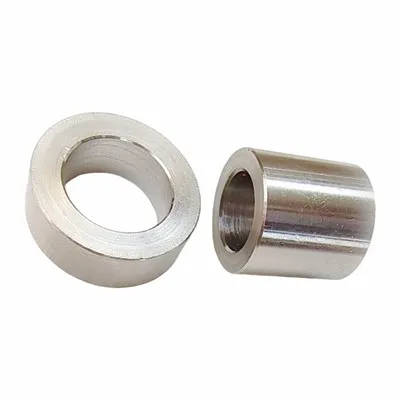
If you are interested in learning more about our connector solutions for data centers or would like to discuss your specific requirements, I encourage you to reach out to us. Our team of experts is ready to assist you in finding the ideal connectors for your data center application. We look forward to the opportunity to work with you and contribute to the success of your data center.
Stud&Bolt References
- [Manufacturer’s Documentation of High – Speed Connectors]
- [Industry Whitepapers on Data Center Power Distribution]
- [Standards Documents from IEEE and TIA]
Kunshan Haizhijie Precision Hardware Co., Ltd.
As one of the most professional connector manufacturers and suppliers in China, we’re featured by quality products and good price. Please rest assured to buy customized connector made in China here from our factory. Also, pricelist is available.
Address: No. 367, Kangzhuang Road, Zhou City Town, Kunshan City, Jiangsu Province, China
E-mail: wzhshui@sina.com
WebSite: https://www.hzhjmetal.com/
