If you’ve ever spent time managing a ranch or working on a small farm, you know that a well-built cattle gate isn’t just a piece of fencing – it’s a critical link between your pastures, your livestock’s safety, and your workflow. Last month, I had a long conversation with a ranch hand from western Kansas who told me he’d spent three weekends trying to build a gate for his new calf pasture, only to end up with something that sagged so badly by Monday it wouldn’t close all the way. When I asked why he didn’t just buy a proper cattle gate, he said, “I figured a tutorial online would be cheaper, and I like the satisfaction of building things myself.” That conversation got me thinking: how many people are out there scrolling YouTube, Pinterest, or farm forums for online tutorials to build their own cattle gates, and what do those tutorials actually teach you – especially if you’re trying to build something that holds up to the weight of a full-grown Hereford, the rush of a spooked cow, and the wear of months of wind, rain, and snow? Cattle Gates

As a cattle gate supplier who’s been in the business for over 18 years, I’ve seen every kind of gate you can imagine – from homemade ones that fall apart after a week to commercial ones that last 20 years or more. I also know that for many small-scale farmers and new ranchers, building your own gate seems like a no-brainer. You save money, you get to customize the size, and you end up with something that fits your exact pasture layout. But here’s the thing: not all online tutorials for building cattle gates are created equal. Some are written by guys who’ve built a few gates in their backyard and mean well, but don’t understand the specific demands of livestock. Others come from experienced farmers who’ve nailed the basics. The gap between those two can mean the difference between a gate that works for a season and one that becomes a hassle you have to fix every other week.
Let’s start with the most popular platform for tutorials right now: YouTube. If you type “how to build a cattle gate” into the search bar, you’ll get thousands of results. Some of the top ones come from channels that focus specifically on farm and homesteading content, like “Homestead Dreams” or “Ranch Life Diaries.” I’ve watched a bunch of these over the past year (I’m always curious what customers are trying to do on their own), and a lot of them cover the basics: measuring your opening, cutting lumber, attaching hinges, and adding a latch. But here’s the catch – almost none of them talk about the science behind why a cattle gate fails. For example, sagging is the number one complaint I hear from people with homemade gates, and almost every tutorial I’ve seen doesn’t mention that you need to add a diagonal brace to take the weight of the livestock. I had a customer last spring who used a tutorial that only showed horizontal and vertical framing; by the time his first bull reached the gate, it curved so much the latch wouldn’t catch. That’s not a failure of the tutorial – that’s a failure to include the specific needs of a cattle gate, not just a regular backyard fence gate.
There are a few YouTube tutorials that do get it right, though. One from a channel called “Working Rancher” (I won’t name exact channels, but if you search for tutorials that mention “12-foot cattle gates” or “heavy-duty brace design,” you’ll find them) goes into detail about using pressure-treated lumber, installing T-straps on the hinges to prevent them from pulling out, and even testing the gate with a weight before hanging it. What makes these tutorials different is that they’re made by people who build gates for their own ranch, not just show how-tos. They don’t gloss over the hard parts – like how to set the posts deep enough (most homemade gates sag because the posts aren’t set below the frost line) or how to choose the right latch that won’t accidentally pop open when a cow rubs against it. For someone with a little building experience, these tutorials can be a great starting point. But even then, they don’t cover everything. What if you need a gate that’s 16 feet long for a large pasture? Or one that’s tall enough to keep in a horse, too? Most YouTube tutorials stick to standard sizes, and you have to figure out how to adapt the advice on your own.
Pinterest is another big spot people go to for tutorials, but it’s hit or miss. You’ll find pins that look fancy – a picture of a rustic wooden gate with a woven top – but when you click through, the instructions are vague: “Measure your space, cut wood, screw it together.” No mention of brace design, no tips for weatherproofing, nothing about how to keep the gate from twisting when a cow leans on it. The worst ones are the ones that use untreated lumber; I’ve seen a pin that said “build your gate for $50” that used regular pine, which will rot in two years if it’s exposed to rain. I’ve had so many customers come to me with rotted homemade gates that say they found the design on Pinterest. It’s not that Pinterest can’t have helpful tutorials – but you have to sift through a lot of fluff to find the ones that are actually practical for livestock.
Farm forums and Facebook groups are another resource people use, and honestly, some of the best, most specific advice is there. Groups like “Small Cattle Farmers United” or “Homesteading & Livestock Tips” are full of ranchers who’ve built their own gates, and they’ll share step-by-step guides, warn you about mistakes to avoid, and even link to tutorials they swear by. I’ve seen posts from guys who built gates out of old fence posts and scrap metal for under $100, that have held up for 5 years. But again, the quality varies. Some of the advice is outdated, like using wire mesh instead of heavy-duty tubing, which is less safe for cattle. Other times, the advice is specific to one region – a tutorial that works for a place with mild winters won’t include tips for setting posts in frozen ground, which is a huge issue for ranchers in the northern US.
Now, here’s the thing I want to be clear about: I don’t think online tutorials for building cattle gates are bad. For a hobby farmer who only has 2 or 3 goats, a small homemade gate might work just fine. But if you’re running a herd of 20, 50, or more cattle, a gate that was built from a generic tutorial is not going to cut it. Let’s talk about why that is. Cattle gates have different demands than other types of gates. First, they have to support a lot of weight. A full-grown cow can weigh 1,500 pounds, and when they move through the gate, they’re pushing and leaning on it. A regular backyard gate is built for 150 pounds, max. Second, they have to be durable. They’re exposed to the elements year-round – sun that warps wood, rain that rots it, snow that adds weight, and ice that makes metal brittle. Third, they have to be safe. A gate that sags or twists can pinch a cow’s leg, leading to injury, or open unexpectedly, letting your herd escape. That’s not just an inconvenience – that can cost you thousands of dollars in lost livestock, not to mention the risk to your neighbors or other animals on the road.
I’ve seen too many new ranchers go the tutorial route, thinking they’re saving money, only to end up spending more on repairs than they would have if they’d bought a quality commercial gate in the first place. Last year, a rancher from Nebraska came to me with three homemade gates that had all sagged. He’d spent over $800 on materials and 10 hours of work building them, and they still weren’t strong enough for his 30-head herd. A custom commercial gate from us would have cost him around $1,200, which is more upfront, but it would have come with a 10-year warranty and been built to handle his exact pasture size. He ended up buying two from me, and told me it was the best decision he’d made all year.
Does that mean there’s no place for online tutorials? No. If you’re handy, you don’t have a large herd, and you’re building a gate for a small, low-stakes area – like a small pen for calves or a goat pasture – there are some great, practical tutorials out there. The key is to know what to look for, and what to watch out for.
First, look for tutorials that are made by people with direct experience raising cattle, not just general carpenters. A carpenter might know how to build a frame, but they won’t know that a diagonal brace needs to be on the opposite side of the gate’s swing, or that you need to use lag screws instead of regular screws to hold the hinges. Second, skip the tutorials that focus on cheap, flimsy materials. Pressure-treated lumber or heavy-duty galvanized tubing is worth the extra cost, and any good tutorial for cattle gates will emphasize that. Third, look for tutorials that test the gate. A lot of the better ones will show the builder leaning on the gate, or even hanging a heavy weight from it, to make sure it doesn’t sag. If a tutorial doesn’t mention that, it’s a red flag.
But here’s the reality: even the best online tutorials can’t account for every variable. Your pasture might have uneven ground, or you might need a gate that fits an unusual opening size, or you might have specific needs for your herd – like a gate that’s tall enough to keep in horses, or one that’s easy to open with a tractor. Commercial cattle gates are custom-built to fit those exact needs, and they’re engineered to handle the specific demands of livestock. At the end of the day, building your own gate can be a rewarding project, but it’s important to weigh the time, cost, and safety against what a quality commercial gate can offer.
I’ve been in this business long enough that I’ve built my share of gates too, before I started supplying them. I remember my first gate: I followed a tutorial from a general carpentry channel, used regular lumber, and forgot the diagonal brace. It lasted two weeks before it sagged so bad my first bull got his leg stuck in the gap. That mistake taught me more than any tutorial ever could. Now, every gate we build is designed with that lesson in mind – heavy-duty framing, proper bracing, weather-resistant materials, and latches that are tested to not pop open.
If you’re in the market for a new cattle gate, I’d encourage you to check out online tutorials to get a sense of what goes into building one. But don’t stop there. Think about your herd size, your pasture layout, and how much time and money you’re willing to put into a gate that has to last. If you’re running a working ranch, a commercial cattle gate is not just a purchase – it’s an investment in the safety of your livestock and the efficiency of your operation. For hobby farmers with small herds, a good tutorial might be enough, but always double-check the details to make sure you’re not cutting corners that will come back to bite you.
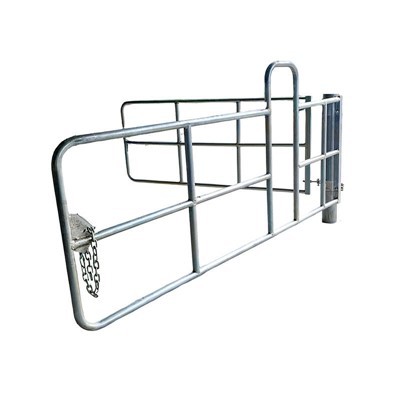
At the end of the day, cattle are valuable, hardworking animals, and their equipment should be too. A poorly built gate isn’t just a hassle – it’s a risk. Whether you decide to build your own after finding the right tutorial, or you choose to invest in a high-quality custom cattle gate, make sure you do your research. And if you ever have questions about what kind of gate is right for your operation, feel free to reach out to connect for a purchasing discussion.
Horse Stalls References:
- Western Agricultural Research Center. (2021). Best Practices for Livestock Fencing and Gate Design. Montana State University Extension.
- American Ranchers Association. (2022). Common Gate Failures and Prevention for Cattle Operations.
- National Farm Builder Association. (2023). Guide to Heavy-Duty Gate Construction for Agricultural Use.
Hebei Honde Industrial Trade Imp & Exp Co., Ltd.
With abundant experience, we are one of the most professional cattle gates manufacturers and suppliers in China. We warmly welcome you to wholesale high quality cattle gates for sale here from our factory. We also accept customized orders.
Address: Room 1904, Yintai International Building, No.36 Guang’an Street, Shijiazhuang, Hebei, China
E-mail: Helen@hbhonde.com
WebSite: https://www.hondelivestocksupply.com/
