In today’s digital age, the transition from IPv4 to IPv6 is no longer a distant vision but an urgent necessity. As the pool of IPv4 addresses is rapidly depleting, IPv6 offers a virtually limitless supply of unique IP addresses, along with enhanced security features and improved network efficiency. For businesses relying on networking equipment, the support for IPv6 is a crucial factor when choosing routers. As a leading supplier of routers for Juniper, I am often asked the question: "Do Juniper routers support IPv6?" In this blog, I will delve into this question, exploring Juniper’s IPv6 support and its implications for your network infrastructure. Routers for Juniper
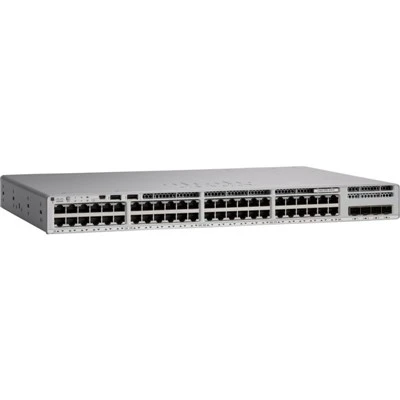
Juniper’s Commitment to IPv6 Support
Juniper Networks has long recognized the importance of IPv6 in the future of networking. As early as the development stages of IPv6, Juniper engineers began working on integrating IPv6 capabilities into their router products. This early investment has allowed Juniper to stay at the forefront of IPv6 technology, providing comprehensive support for IPv6 networking across its entire product portfolio.
Juniper routers are designed with a modular architecture that allows for easy integration of IPv6 support. Whether you are using Juniper’s high – end core routers, mid – range edge routers, or small – scale branch routers, you can expect robust IPv6 functionality. For example, the Juniper MX Series of routers, which are widely used in service provider networks, offer advanced IPv6 features such as IPv6 Unicast Routing, IPv6 Multicast Routing, and IPv6 Quality of Service (QoS). These features enable service providers to deliver seamless IPv6 services to their customers, whether it is for residential broadband, enterprise networking, or mobile communications.
Key IPv6 Features Supported by Juniper Routers
1. IPv6 Unicast Routing
Juniper routers support a variety of IPv6 unicast routing protocols, including OSPFv3 (Open Shortest Path First version 3), RIPng (Routing Information Protocol next generation), and BGP4+ (Border Gateway Protocol version 4 +). OSPFv3 is a link – state routing protocol optimized for IPv6. It allows routers to exchange routing information efficiently and calculate the shortest path to reach other IPv6 networks. RIPng, on the other hand, is a distance – vector routing protocol that is suitable for small – to – medium – sized networks. BGP4+ is the primary protocol used for inter – domain routing in the global Internet. Juniper’s implementation of BGP4+ supports IPv6 address families, enabling service providers to connect their IPv6 networks to the global IPv6 Internet.
2. IPv6 Multicast Routing
Multicast is an important feature for applications such as video streaming, online gaming, and IP telephony. Juniper routers support IPv6 multicast routing protocols, such as Multicast Listener Discovery (MLD) and Protocol Independent Multicast (PIM). MLD is used to discover IPv6 multicast listeners on a local network segment. PIM, on the other hand, is responsible for building multicast distribution trees, which are used to forward multicast traffic from the source to the receivers. With these protocols, Juniper routers can efficiently handle IPv6 multicast traffic, ensuring that multimedia applications can run smoothly on IPv6 networks.
3. IPv6 Quality of Service (QoS)
QoS is essential for ensuring the performance of critical applications on a network. Juniper routers support a wide range of IPv6 QoS features, including traffic classification, traffic policing, traffic shaping, and priority queuing. Traffic classification allows routers to distinguish between different types of IPv6 traffic, such as voice, video, and data. Traffic policing and shaping are used to control the rate of traffic, preventing network congestion. Priority queuing ensures that high – priority traffic, such as voice and video, is given preferential treatment over low – priority traffic. With these features, Juniper routers can guarantee the quality of service for IPv6 applications, even in a high – traffic environment.
4. IPv6 Security
Security is a top concern for any network. Juniper routers offer a comprehensive set of IPv6 security features, including Access Control Lists (ACLs), Intrusion Detection Systems (IDS), and IPsec. ACLs can be used to filter IPv6 traffic based on source and destination addresses, port numbers, and other criteria. IDS monitors network traffic for suspicious activity and can alert network administrators in case of an attack. IPsec provides secure communication between IPv6 networks by encrypting the data packets. These security features help protect your IPv6 network from unauthorized access, attacks, and data breaches.
Benefits of Using Juniper Routers with IPv6 Support
Future – Proofing Your Network
By adopting Juniper routers with IPv6 support, you are future – proofing your network. As the world moves towards an IPv6 – only Internet, having IPv6 – enabled routers will ensure that your network can continue to operate smoothly and connect to the global Internet. This is especially important for businesses that rely on the Internet for their day – to – day operations, such as e – commerce, cloud computing, and online services.
Enhanced Network Performance
IPv6 offers several performance benefits over IPv4, such as simplified header structure and support for larger packet sizes. Juniper routers are optimized to take full advantage of these IPv6 features, providing faster and more efficient network performance. With Juniper routers, you can expect reduced latency, higher throughput, and improved network reliability.
Improved Security
As mentioned earlier, Juniper routers offer a comprehensive set of IPv6 security features. These features help protect your network from the increasing number of cyber threats in today’s digital world. By using Juniper routers with IPv6 support, you can ensure that your network is secure and your data is protected.
Integration and Deployment
Juniper makes it easy to integrate IPv6 support into your existing network infrastructure. Whether you are upgrading from an IPv4 – only network or building a new IPv6 network from scratch, Juniper provides a range of tools and resources to help you with the transition. For example, Juniper offers IPv6 migration guides, which provide step – by – step instructions on how to enable IPv6 on your routers and configure the necessary routing protocols.
In addition, Juniper routers support dual – stack operation, which allows them to handle both IPv4 and IPv6 traffic simultaneously. This means that you can gradually introduce IPv6 into your network without disrupting your existing IPv4 services. During the transition period, your Juniper routers can act as a bridge between IPv4 and IPv6 networks, allowing communication between the two.
Case Studies
There are numerous case studies of businesses that have successfully deployed Juniper routers with IPv6 support. For example, a large telecommunications service provider was able to upgrade its network to support IPv6 using Juniper MX Series routers. By leveraging Juniper’s advanced IPv6 features, the service provider was able to offer new IPv6 – based services to its customers, such as high – definition video streaming and cloud – based applications. The deployment of Juniper routers also improved the overall network performance and security, leading to increased customer satisfaction and reduced operational costs.
Conclusion

In conclusion, Juniper routers offer comprehensive support for IPv6, with a wide range of features and benefits that make them an ideal choice for businesses looking to upgrade their network infrastructure. Whether you are a service provider, an enterprise, or a small business, Juniper routers can help you meet the challenges of the IPv6 transition and ensure the continued success of your network.
Routers If you are interested in learning more about Juniper routers and their IPv6 support, or if you are considering a purchase of networking equipment, I encourage you to reach out to me for a detailed discussion. Our team of experts is ready to assist you in selecting the right Juniper routers for your specific needs and in providing support throughout the deployment process.
References
- Juniper Networks Product Documentation
- RFC documents related to IPv6 protocols, such as RFC 2460 (IPv6 Specification), RFC 2740 (OSPF for IPv6), etc.
- Reports and whitepapers on IPv6 adoption and Juniper network technology from industry analysts.
AITI Tech Limited
AITI Tech Limited is one of the most professional routers for juniper manufacturers and suppliers in China for over 20 years, featured by quality products and low price. Welcome to buy bulk discount routers for juniper in stock here from our factory. If you have any enquiry about pricelist, please feel free to email us.
Address: 6F, Haogong Building, Yannan Road, Futian District, Shenzhen, China
E-mail: kelly@hkaiti.com
WebSite: https://www.hkaiti.com/
